Killdeer Couple Faces Multiple Charges

KILLDEER — A rural Killdeer couple is at the center of multiple charges that allegedly involved drugs, explosives and a pet rattlesnake — all of which contributed to child neglect — after multiple law enforcement agencies executed a search warrant of their property Friday.

John J. Reiss III and his wife, Sara Brooke Reiss, have been charged with four felonies — including three Class C felony charges each of neglect of a child under the age of 5.

Dunn County Sheriff Clay Coker said both John and Sarah Reiss, as well as Shaun Paul, also of Killdeer, were arrested for possession of methamphetamine, a Class C felony, and meth paraphernalia, a Class A misdemeanor.

According to their respective criminal complaints, John and Sarah Reiss exposed their three children — ages 5, 3 and 2 — to meth, drug paraphernalia, explosives, assault weapons, unsafe and unsanitary living conditions, and people who were under the infl uence of illegal controlled substances. The child neglect charges were added Monday by the Dunn County State Attorney’s Offi ce while the Reisses both were being held at the Southwest Multi County Correctional Center.

The couple also each face a Class B misdemeanor charge of possessing a venomous reptile without the required state permit.

The reptile was a rattlesnake named “Richard,” according to the complaint. Coker said the Reisses have admitted to having kept the animal for several years.

John Reiss was arrested Thursday on an outstanding warrant for failure to appear in court on a suspended license charge. Paul, Sara Reiss and Philip McCoy, of Killdeer, were arrested Friday in the search. McCoy had an outstanding Dickinson city warrant.

At a farmstead owned by the Reiss family, Coker said, an improvised explosive device was also found and had to be disposed of by the Bismarck Bomb Squad.

Also located in the searches were livestock bearing illegally altered brands and weapons that had been modifi ed.

The Southwest Tactical Team, the Badlands Narcotics Task Force and the North Dakota Bureau of Criminal Investigations were part of the search, along with the Dunn County Sheriff’s Offi ce. The North Dakota Department of Game and Fish and the North Dakota Stockmen’s Association responded to the incident because of the animal crimes discovered during the search.

“A lot of fl uid things had to come together to do it safely,” Coker said.

Coker added that he anticipates there being more charges fi led and possibly more arrests stemming from information obtained from the search warrants.

“We’re still in the middle of developing some other cases,” he said.

Will some Democrats please step up?

Southwest North Dakota is by no means some bastion of political divisiveness. Though, we are absolutely blood-red Republican on the political map, there have always been Democrats willing and able to step up and take a shot at winning local and state elections.

Sometimes — and it wasn’t even that long ago — they won.

It begs the question: What the heck happened to the Democrats?

Last Tuesday night, southwest North Dakota’s Democrats held their party meeting in the conference room at Players Sports Bar and Grill in Dickinson. It was supposed to be part-Super Tuesday watch party, part-nominating meeting for District 36 candidates in the 2016 election.

Not a single candidate emerged from that meeting. No one stepped up as willing to seek the nomination for the district’s three legislative positions up for grabs this November. Instead, the district’s executive committee will likely nominate — i.e. appoint — candidates at the party’s state convention on April 1.

This lack of enthusiastic participation among Democrats is disconcerting to those of us who love the political process and, worse yet, anecdotal evidence suggests it’s a common theme across the state.

On Thursday night, three Republican candidates for governor held a statewide televised debate. The Democrats haven’t even put up one candidate.

Kylie Oversen, the state’s Democratic chair and a Killdeer native, has said numerous times that the party plans to roll out its governor candidate either before or during the state convention.

By then, it’ll already be too late. The Democratic candidate, barring some miracle, doesn’t stand a chance against a fired-up Republican base ready to hold on to the governor’s office for a 25th year and beyond.

So, have our state’s Democrats become defeatists when it comes to statewide positions, or is it something different?

The last Democrat to hold the governor’s office was George Sinner. He beat Dickinson’s Leon Mallberg in 1988 — his final term — with 60 percent of the vote. Since then, the only Democrat to garner more than 45 percent of the vote was in 2000 when our current U.S. senators John Hoeven and Heidi Heitkamp faced off, with Hoeven emerging the victor.

Still, until 2010, all three of North Dakota’s U.S. Congress seats on the left side of the aisle in Washington.

The past few election cycles have made for somewhat shocking turn to the right for a state that once prided itself in bipartisanism.

Now, Heitkamp is the only remaining left-wing politician who holds any major national or state office. And how did she do it? Simple. She has occasionally sided with the pro-oil and pro-coal crowds, often distances herself from President Barack Obama’s most liberal viewpoints and speaks not only to her party’s base, but to moderate swing voters.

So where are the Democrats’ future Heidis? Are they out there and just bad at getting their message out? Are they unelectable because they’re not willing to play the same political game Heitkamp does? Do they even exist?

We’re three months away from June primaries and just under 250 days from the Nov. 8 general election.

Democrats need someone — anyone — to step up soon if the party wants even a fighting chance at winning the state’s gubernatorial or congressional elections. Remember, Hoeven and Rep. Kevin Cramer are up for election too. So far, no challengers.

Republicans have been in charge of state government through good times and bad for nearly a quarter-century, and it seems obvious that Democrats have no real plans to challenge that.

It’s a lack of action that’s frustrating.

As a media member, it’s obviously not fun to cover unopposed political races. More importantly, it would represent an unfortunate step backward in our political process.

Where’s the North Dakota pride and spirit?

North Dakota Democrats need to get their act together, rally their base and find some candidates who can make this a legitimate election. And they need to do so quickly, otherwise the defeatist attitude will translate into exactly that.


Monke: Obama's silly oil tax just another ego trip

When you ask three members of Congress the same question about a proposed policy and every one of them laughs about it, you know it can’t be good.

That was the case when I interviewed members of the North Dakota Congressional delegation about President Barack Obama’s proposed $10.25 per barrel oil production tax in his 2016 spending budget.

Republican Rep. Kevin Cramer called the tax “dead on arrival.” Sen. John Hoeven, also a Republican, believes it would go so far as to threaten national security. Sen. Heidi Heitkamp, a Democrat, said trying to impose this kind of tax on the oil industry right now was like kicking someone when they’re down.

All three of them agree it would mean thousands of lost jobs across the country.

And for what? More “environmental progress” as the president himself put it last week?

Look, I’m all for green energy and agree that we need an all-of-the-above energy strategy in this country. We know wind farms can work and earlier this year, I visited Yuma, Ariz., a city where solar panels are a common sight to see on rooftops.

Green energy is good energy. But there’s only so much we can do with it right now as a country.

Cars don’t run on hopes and dreams, and plastic isn’t created by fairy dust. Oil does that. Not wind. Not sunshine. Oil.

Obama said during a Feb. 5 press conference that Americans need to wean ourselves off “dirty fuels.” And that by doing this, and implementing this tax, it’s going to make for a stronger economy. “A wise decision for us to make,” he said.

I’m not sure our president understands — or for that matter, cares — about how much the oil industry matters to the American economy. Heck, I didn’t understand it until the industry planted itself in western North Dakota.

At that Feb. 5 press conference, Obama touted more fake job numbers handed to him by some lackey at a government agency being paid to create them for him out of thin air. But, you never heard one peep about the job boom created earlier in his presidency by shale oil production in North Dakota and Texas. Because he wanted nothing to do with it.

Now, with the oil industry on the downslide, Obama is doing what all good environmentalists do — he’s going for a killing blow and he’s trying to do it through government policy. Even though he’s highly likely to swing and miss on this one.

This pipe dream of a tax isn’t aimed at building roads and creating self-driving cars, as the president claims. It’s an ego trip wrapped around his radical agenda that the majority of Americans don’t even agree with.

Let’s hope Congress has some sense and tells Obama to kick this can down the road and straight into his recycling bin.

Ag commissioner: 2016 outlook ‘pretty dismal’ for farmers

Doug Goehring may be North Dakota’s agriculture commissioner, but at the end of the day, he’s still a farmer.

Like any farmer, he has to deal with the low commodity prices that have producers from southwest North Dakota to the Red River Valley concerned and apprehensive about what the 2016 growing season will bring.

“It’s pretty dismal,” Goehring said of the state’s ag outlook. “… At this point, my understanding visiting with farmers — and even on our own farm — is there’s some hard decisions to make.”

Goehring admitted he’s even thinking about giving up a piece of rented land that may not pencil out as profitable this year.

He said he’s heard the same story throughout the state as farmers weigh their input costs with commodity prices that are lower than they’ve been in several years and are causing them to see red on the bottom lines of their projected yearly balance sheets.

“Farmers don’t see any black anywhere they look,” he said. “Then it’s a matter of trying to assess, ‘Where can you lose the least amount of money at?’”

Ron Haugen, a farm management specialist with the North Dakota State University Extension Service in Fargo, is part of a group that releases an annual report meant to aid producers in planning for the upcoming growing season.

“This has been some of the lowest prices we’ve had in several years,” he said.

North Dakota farmers are planning for their worst spring wheat prices in at least six years — nearly $2.50 a bushel lower than recent averages — with durum wheat at its lowest since 2011, according to the Extension Service’s data.

Corn prices, for the past two years, have been about $1.50 a bushel lower than recent averages and are nearly half the price of what they were in the 2012-13 marketing season.

Oil sunflowers are $8.35 per hundred weight lower than average and down nearly $5 since last year. Soybeans and canola are both at their lowest point in the past five years and well below recent averages.

“To have tight margins is actually more the norm,” Haugen said. “The last five years have seen extraordinarily high prices. This is getting back to more normal, where things are tighter.”

Despite the benefit of farmers and ranchers having the lowest fuel prices than they’ve had in several years, the gains there don’t stack up with low commodity prices.

Greg Fitterer, with Helena Chemical in New England, has been in the fertilizer and bulk fuel sale business much of his life.

He said farmers know little to nothing is going to pencil out positive at current commodity prices. Fertilizer prices aren’t much more expensive than they were five years ago, either, and he said the producers his company works with aren’t likely to back off on how much fertilizer they put on, unless spring becomes unusually dry, because they feel it’ll help keep their yields higher.

“Everything goes in cycles,” he said. “You have your ups and your downs. I’d say most guys’ goals this year is to break even. To not lose equity. It’s sad, but you’re basically not trying to strike out and hit a single.”

Goehring said he’d still like to see the chemical and fertilizer business — especially when it comes to nitrogen fertilizer and anhydrous ammonia — settle into more reasonable price in line with ag and energy commodities.

“There’s things way out of whack,” he said. “It’s gotten to a point where the industry is charging what it’ll bear and they need to come down a little bit. They’ve been squeezing too much out of the farmer, and taking advantage of the opportunity — when commodity prices are high, we’re going to get more from the farmer.”

Goehring said most farmers are looking at “bare bones minimum” spending plans to try and get through 2016 with the hope that better years and higher commodity prices — along with a better world economy, which greatly dictates those commodity prices — are around the corner.

“They’re trying to figure out everything that they can do to make that balance sheet work so they can buy another day, buy another year, another season to farm,” Goehring said. “Because chances are, a year and a half from now, things are going to be a little bit better.”

ND Delegation Upset by Obama’s Oil Tax Plan

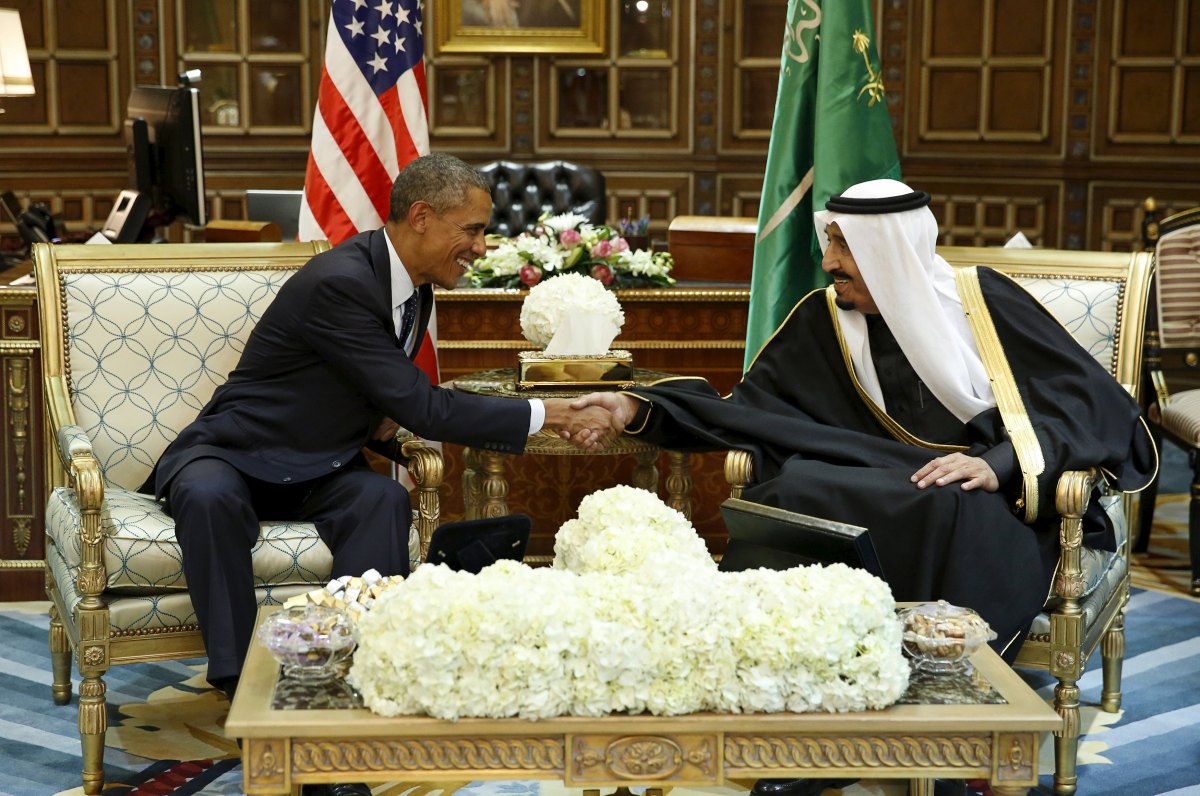
WASHINGTON — North Dakota’s Congressional delegation is both laughing off and expressing unbridled disgust over President Barack Obama’s bid to impose a $10-a-barrel tax on crude oil.

The longshot tax proposal, which will be a part of Obama’s fi scal 2017 budget plan on Tuesday, would fund the overhaul of the nation’s aging transportation infrastructure, the White House said on Thursday.

“To be honest when I fi rst saw it, I thought someone was mistaken,” said Rep. Kevin Cramer, R-N.D. “Clearly, it’s real. … We all know it’s dead on arrival. This thing has zero chance of being taken even remotely seriously.”

The proposed fee, which would be paid by oil companies and phased in over fi ve years, was quickly met with scorn by lawmakers in the Republican-controlled Congress, and some Democrats, including North Dakota Sen. Heidi Heitkamp.

“Way to kick somebody when they’re down,” said Heitkamp, whose line was echoed almost verbatim by North Dakota Republican Sen. John Hoeven in phone interviews with The Press.

“This is never going to happen,” Heitkamp added. “This is some kind of crazy, Hail Mary pass that will never, ever see the light of day. It is not responsible if you’re trying to put together a budget. It’s really, really unfortunate.”

In the last year of his presidency, Obama has said the country must stop subsidizing the “dirty” fossil fuels of the past and focus on clean, renewable fuels that do not exacerbate climate change.

The $10 tax would, ironically, come at a time of tumbling oil prices.

Oil prices fell last month to below $30 a barrel, the lowest level since 2003, as demand fails to keep pace with a glut of new supply and the world’s biggest oil producers resist cutting production.

The fee would provide nearly $20 billion a year to help expand transit systems across the country and more than $2 billion a year to support the research and development of self-driving vehicles and other low-carbon technologies.

“By placing a fee on oil, the President’s plan creates a clear incentive for private sector innovation to reduce our reliance on oil and at the same time invests in clean energy technologies that will power our future,” the White House said in a statement.

Cramer said the proposal speaks to Obama’s radical environmental agenda.

“His goal is to make fossil fuels so expensive that other forms of energy look good by comparison, and use the extra money he raises from this stuff to further supplement the green energy sector, which can’t compete on a level playing fi eld,” Cramer said. “This is clearly all him in terms of what he believes and the way he views the world.”

Republican lawmakers, who have repeatedly clashed with the Obama administration over energy policy, panned the proposal on social media. House Majority Whip Steve Scalise asked on Twitter whether the proposal was “Obama’s worst idea yet?”

Hoeven, who is on the Senate Committee on Energy and Natural Resources, said it’s not just a bad idea economically, but also in terms of national security.

“We’re in a global battle to determine who is going to provide energy,” he said. “It’s a national security issue. … Bottom line, again, he’s making it harder for us to produce energy here at home while he makes it easier for our adversaries like Iran to produce energy.”

Neal Kirby, a spokesman for the Independent Petroleum Association of America, said in a statement that the tax would ultimately be passed along to U.S. consumers, who have benefited from low gasoline prices.

Jeff Zients, director of the White House National Economic Council, pushed back against assertions the oil tax would place U.S. crude producers at a disadvantage.

He told reporters on a call that the fee would be applied to domestically produced and imported barrels of oil but not to crude exported from the U.S. North Dakota Petroleum Council President Ron Ness said crude oil is already taxed extensively at both state and federal levels, and to impose a greater tax — especially when prices are so low — would be devastating the industry.

“You’ve got to give him (Obama) credit for sticking to his anti-American economic positions, as far as producing our own energy sources here,” Ness said. “He seems more intent on destroying our own energy economy than helping it succeed.”

Reuters contributed to this story.