Bowman’s Steve Brooks balances ranching with role as ND Stockmen’s Association president

BOWMAN — Skeeter Brooks is getting an education not only in ranching, but also the often unseen business that happens outside of the corrals.

The 25-year-old is part of the sixth generation at Brooks Chalky Butte Angus Ranch, and said her ranching education is growing every day — particularly through her father Steve Brooks’ role as North Dakota Stockmen’s Association president.

“We learn a lot from it,” she said. “Every day, somebody might call and they’ll have a question about brands or something, so that furthers us in our education. You meet so many people too. There’s always people stopping by. When you go somewhere, you always run into somebody.”

Steve Brooks — who runs Brooks Chalky Butte Angus Ranch north of Bowman with his brother, Ryan, and their families — has spent a lifetime ranching. But for the past year and a half, he has also taken on the leadership role among cattlemen in the state. Though the position forces him to balance his time between working on the ranch and on behalf of his peers throughout the state, Brooks said he’s pleased with what he’s been able to accomplish — even if it keeps him very busy.

“Being president of Stockmen’s has involved a lot more than I realized,” he said with a laugh, noting he was also president of American Angus Association in 2003. “That was a big job, and I thought this was a step down and a lot less time consuming, but it’s not.”

During last year’s legislative session, Brooks said he drove from Bowman to Bismarck a dozen times. He’s taken trips to Washington, D.C., to meet with the state’s Congressional delegation and others in the agriculture industry.

And he does all of it while operating the 109-year-old ranch that’s gearing up for its annual production sale April 2 in Bowman. They’ll be selling about 180 bulls that day, as well as 1,000 of their customers’ bred heifers.

“It’s a lot harder to get away,” he said.

As Stockmen’s Association president, Brooks has lobbied against government overreach in the country-of-origin labeling (COOL) program for marketing U.S. beef, helped ensure a beef checkoff rate increase from $1 to $2 a head to help with the program’s long-term sustainability, represented southwest North Dakota landowner interests in a debate against the Bureau of Land Management over the classification of the sage grouse as an endangered species, and lobbied against the controversial Waters of the U.S. rule that would allow the federal government, namely the Environmental Protection Agency and the U.S. Army Corps of Engineers, jurisdiction over most of the nation’s bodies of water — including waters on private land.

The most recent issue he’s working through is how a change in state tax law has affected the way counties can charge property tax on those leasing state school land, which is done mostly for use as pasture.

“We’ve been working on some of that to get that straightened out,” Brooks said, adding the Stockmen’s Association is seeking the state attorney general’s opinion on the matter.

He also said the Stockmen’s Association is aiming to increase brand fees 50 cents soon because of increases in its health insurance and salaries that help keep the association competitive in the job market.

Brooks said it’s a good time to be an established cattleman in North Dakota.

“Last year was the best market we’d ever seen in the history of cattle in the U.S.,” he said. “We turn around and it’s dropped 60-70 cents a pound and we’re still in the second-best market we’ve been in.”

And at the end of the day, that’s who Brooks is — a cattleman who is doing what he can to ensure more family ranches and farms stay afloat.
 

Editorial: Medora won’t be the same without its ‘First Lady’

By The Dickinson Press Editorial Board

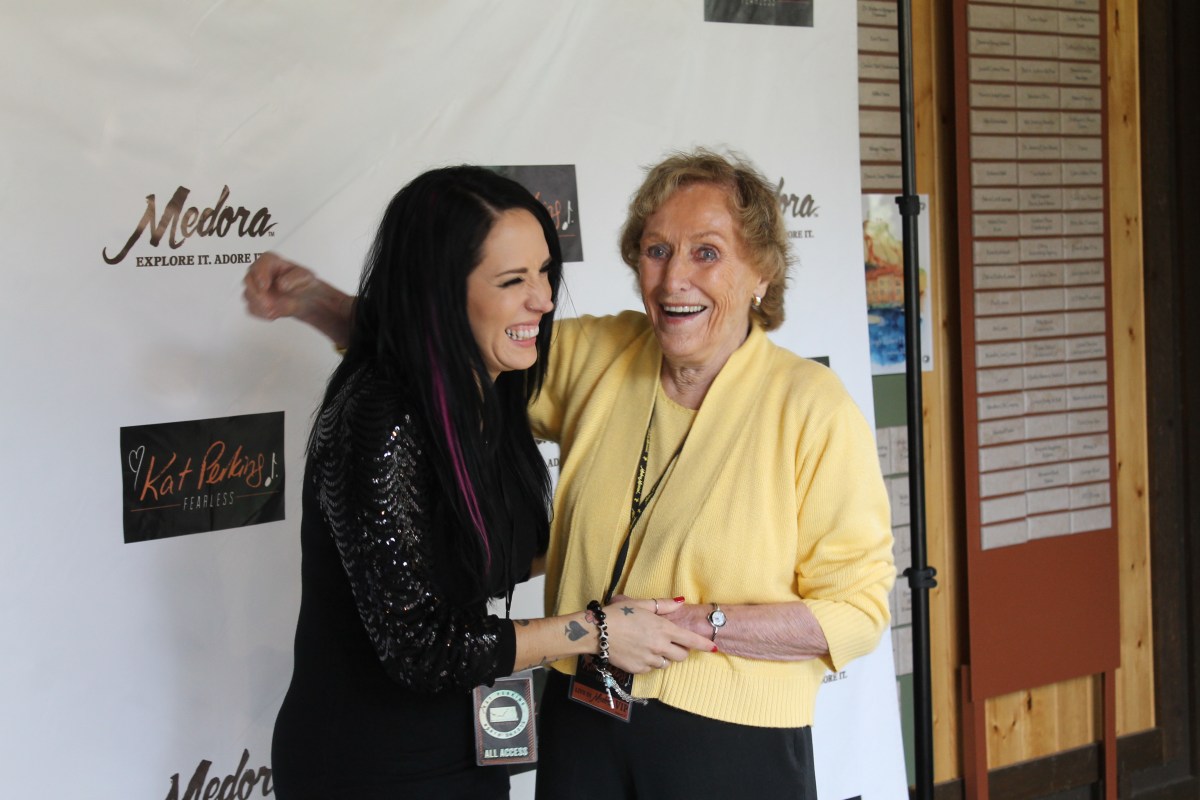
MEDORA — Medora won’t be the same without Sheila Schafer.

It won’t be the same without her sitting on the porch of her log cabin home, greeting tourists with a wave and a smile. And it won’t be the same without the Fourth of July fireworks party on the cabin’s front lawn.

It won’t be the same without Sheila singing and clapping as she sits front and center at the Medora Musical — the show she and her late husband, businessman Harold Schafer, helped start 51 years ago that sparked the revitalization of the town that is now North Dakota’s biggest tourist attraction.

Sheila Schafer, the magical matriarch of modern Medora and the woman commonly known as the town’s “First Lady” died Wednesday at age 90 after fighting cancer and other illnesses for several years.

Sheila will be remembered for her class, charm and cheerfulness, and as an ambassador not only for Medora but also North Dakota.

Exemplifying the “magic” that many spoke of when they talked about her, Sheila hiked up Buck Hill in Theodore Roosevelt National Park on her 90th birthday — just the same as she had done for several years — before settling in for what would be her final summer in Medora.

Last July, she was honored as the Medora Musical celebrated its 50th anniversary. At a ceremony, Sheila recalled a lifetime of memories on the stage that she called one of the “most magnificent settings in the West.”

“Thank you for 50 years of great memories,” she told the audience.

In a couple of months, tourists will once again begin descending on Medora for the summer.

Every day, people will line the streets to shop, eat ice cream, visit museums and take in the beauty of the Badlands. Crowds will pack the Burning Hills Amphitheatre for the Medora Musical.

But something will be forever missing.

Without Sheila Schafer, summer in Medora just won’t be the same.


The Dickinson Press Editorial Board consists of Publisher Harvey Brock and Managing Editor Dustin Monke.


Game and Fish brings back bighorn sheep season

BISMARCK — The western North Dakota Badlands will likely have a bighorn sheep hunting season again this fall, the North Dakota Game and Fish Department announced Monday.

A bacterial pneumonia virus affected the state’s bighorn herd so badly in 2014 that Game and Fish closed the 2015 season.

But the animals have recovered well enough that Game and Fish Wildlife Division Chief Jeb Williams said a season will happen this fall, barring unforeseen pneumonia issues this spring and summer.

“What we found is we still have some harvestable adult sheep out there that we’d just as soon see the public utilize,” Williams said.

Historically, two to eight licenses for male bighorn sheep are drawn yearly in North Dakota, Williams said.

The 2016 season status will be determined Sept. 1 after the completion of summer population surveys, he said.

“There’s still potential for animals to die of pneumonia,” Williams said. “That’s why we have the provision in there that we’ll do our summer surveys first.”

Bighorn sheep hunting can only take place in select Badlands hunting units. The units include all of Slope and Golden Valley counties, and parts of Billings, McKenzie and Dunn counties. This year, no hunting will be allowed south of either the Theodore Roosevelt National Park North or South Units.

“It’s such a tremendous resource that we have, and it’s only found in the Badlands,” said Bruce Stillings, big game management supervisor in Dickinson’s Game and Fish office. “It’s quite a unique opportunity for our hunters to be able to hunt. The reopening is excellent news for us as a department and to the hunters alike.”

Brett Wiedmann, a big game biologist in Dickinson, said as many as 11,000 people typically send in the $5 nonrefundable application to draw one of the few bighorn sheep hunting licenses the state allots. He said that’s more applicants than Wyoming and Idaho typically receive, even though they have larger bighorn sheep populations.

“It’s one of the toughest draws of any license in North America each year we have a season,” he said. “It’s truly the hunt of a lifetime.”

The North Dakota bighorn sheep bow-hunting season is scheduled to run from Oct. 21 to Dec. 31, with a regular gun season from Oct. 28 to Dec. 31.


Watching the herd

Wiedmann is in the process of completing the 2015 bighorn sheep lambing survey and will conduct the comprehensive survey this summer.

He said lamb numbers through the herd look good, and said Game and Fish is paying close attention to the herd’s susceptibility to the pneumonia pathogens.

“It could flare up at any time,” Wiedmann said. “If we have a recurrence of pneumonia, we could lose a significant number of animals.”

However, he said the department wouldn’t have started the process of reopening the bighorn sheep hunting season if it was concerned another population disruption would happen soon. He said the pneumonia cases have slowed since late 2014.

Williams said the pneumonia issue in bighorn sheep is complex and controversial, and called it the “No. 1 concern among sheep biologists.”

He said national research has shown bighorn sheep that have contact with domestic sheep are at risk of getting the virus.

“There’s a lot of research associated with that issue,” Williams said. “At this point in time. We don’t have a definitive answer of how that happens.”


Additional elk licenses

Thirty-five additional elk hunting licenses have been added for the two western North Dakota hunting units that encompass much of the same area as the bighorn sheep hunting unit.

Game and Fish added 37 elk licenses, making 338 available in the state. The E3 unit, which is Billings, Golden Valley and Slope counties–not including Theodore Roosevelt National Park–added 10 any-elk licenses and 15 antlerless elk licenses. The E2 unit, which is Dunn and McKenzie counties, added 10 any-elk licenses.

Williams said the state has closed Sioux County to elk hunting.

He said a herd is growing in that area, so Game and Fish is working with the Standing Rock Sioux Tribe and private landowners to allow them to increase in numbers. He said an attempt could be made at reopening elk hunting in Sioux County next year.


Moose licenses added

An increasing moose population allowed Game and Fish to allow 70 more hunting licenses for the animal. The majority of the new licenses can be found in the north central units, where there has been an increase in antlerless moose.

“Moose have been doing very well in the prairie areas of North Dakota,” Williams said. “Their numbers have really been expanding … we’d just as soon have the public utilize that opportunity rather than trucks and vehicles hitting them.”

There will be 202 moose licenses drawn in the state.

The moose bow hunting season runs from Sept. 2-25, the regular season in Units M8, M9 and M10 run from Oct. 7-10 and the regular gun season for Units M5 and M6 is from Nov. 18 to Dec. 11.

Will some Democrats please step up?

Southwest North Dakota is by no means some bastion of political divisiveness. Though, we are absolutely blood-red Republican on the political map, there have always been Democrats willing and able to step up and take a shot at winning local and state elections.

Sometimes — and it wasn’t even that long ago — they won.

It begs the question: What the heck happened to the Democrats?

Last Tuesday night, southwest North Dakota’s Democrats held their party meeting in the conference room at Players Sports Bar and Grill in Dickinson. It was supposed to be part-Super Tuesday watch party, part-nominating meeting for District 36 candidates in the 2016 election.

Not a single candidate emerged from that meeting. No one stepped up as willing to seek the nomination for the district’s three legislative positions up for grabs this November. Instead, the district’s executive committee will likely nominate — i.e. appoint — candidates at the party’s state convention on April 1.

This lack of enthusiastic participation among Democrats is disconcerting to those of us who love the political process and, worse yet, anecdotal evidence suggests it’s a common theme across the state.

On Thursday night, three Republican candidates for governor held a statewide televised debate. The Democrats haven’t even put up one candidate.

Kylie Oversen, the state’s Democratic chair and a Killdeer native, has said numerous times that the party plans to roll out its governor candidate either before or during the state convention.

By then, it’ll already be too late. The Democratic candidate, barring some miracle, doesn’t stand a chance against a fired-up Republican base ready to hold on to the governor’s office for a 25th year and beyond.

So, have our state’s Democrats become defeatists when it comes to statewide positions, or is it something different?

The last Democrat to hold the governor’s office was George Sinner. He beat Dickinson’s Leon Mallberg in 1988 — his final term — with 60 percent of the vote. Since then, the only Democrat to garner more than 45 percent of the vote was in 2000 when our current U.S. senators John Hoeven and Heidi Heitkamp faced off, with Hoeven emerging the victor.

Still, until 2010, all three of North Dakota’s U.S. Congress seats on the left side of the aisle in Washington.

The past few election cycles have made for somewhat shocking turn to the right for a state that once prided itself in bipartisanism.

Now, Heitkamp is the only remaining left-wing politician who holds any major national or state office. And how did she do it? Simple. She has occasionally sided with the pro-oil and pro-coal crowds, often distances herself from President Barack Obama’s most liberal viewpoints and speaks not only to her party’s base, but to moderate swing voters.

So where are the Democrats’ future Heidis? Are they out there and just bad at getting their message out? Are they unelectable because they’re not willing to play the same political game Heitkamp does? Do they even exist?

We’re three months away from June primaries and just under 250 days from the Nov. 8 general election.

Democrats need someone — anyone — to step up soon if the party wants even a fighting chance at winning the state’s gubernatorial or congressional elections. Remember, Hoeven and Rep. Kevin Cramer are up for election too. So far, no challengers.

Republicans have been in charge of state government through good times and bad for nearly a quarter-century, and it seems obvious that Democrats have no real plans to challenge that.

It’s a lack of action that’s frustrating.

As a media member, it’s obviously not fun to cover unopposed political races. More importantly, it would represent an unfortunate step backward in our political process.

Where’s the North Dakota pride and spirit?

North Dakota Democrats need to get their act together, rally their base and find some candidates who can make this a legitimate election. And they need to do so quickly, otherwise the defeatist attitude will translate into exactly that.


A man who lived to help: Family, friends reflect on life of Dickinson volunteer firefighter Hammond who died in avalanche

The Hammond family sat at a table, both laughing out loud and quietly shedding tears as they reflected on the life of Levi Hammond.

“He just wanted to help,” said Levi’s sister, Karla, as her eyes welled with tears.

Levi Hammond
Levi Hammond

Her five words brought the room to a brief silence, as it almost perfectly summed up Levi’s short, yet accomplished life.

Levi, a married father of three young children and volunteer firefighter whose family said he put the Lord above all else, died Saturday morning at 36 during an avalanche while he was snowmobiling with friends in the Bighorn Mountains near Sheridan, Wyo.

Levi’s family said he lived life by going all out, whether he was fighting fires, studying the Gospel, selling farm equipment for Butler Machinery, or simply buying his wife, Becky, the best contact solution he could find.

“He didn’t have any concern for himself,” Becky Hammond said. “His concern truly was for others around him.”


Called to help

Levi’s tragic death isn’t just hitting his family hard. It has shocked fire departments in Dickinson, Beach and Golva, as well as the staff at Butler.

Dickinson Fire Chief Bob Sivak said it’s hard to think that someone who was as passionate about life as Levi is now gone.

“In a very real sense, we’ve lost a member of a family,” Sivak said. “This isn’t just a group of people that comes together now and then. There’s a real attachment in a fire service. His loss is truly felt and has truly hurt us.”

Levi spent two summers after high school as a firefighter for the U.S. Forest Service in Miles City, Mont., and continued as a volunteer member of his hometown Beach and Golva fire departments.

He became a state board-certified firefighter last May and Becky said he toyed with the idea of taking a full-time position with the Dickinson Fire Department when new openings were created. Sivak said he and Levi had a good talk about what doing that would mean.

“He prayed about it,” Becky said. “It was a definite no. He did say, ‘Becky, I know that I’m called to be a firefighter. I know that this is what I’m supposed to do.’”

Sivak recalled times after the department had wrapped up fighting a fire and Levi would be standing there sweaty and dirty with a smile on his face. Friends and family said it was nearly comical to see how invigorated Levi was the morning after a late-night call, even if it meant he didn’t get any sleep.

“He loved to help people,” said Ed Hammond, Levi’s father. “He just had a passion for it. He loved to be there. I suppose a lot of it was the adrenaline rush.”


Selfless role model

Tom Irwin, a Dickinson volunteer firefighter who is married to the Hammonds’ cousin, described Levi not only as a selfless role model, but a man who celebrated the achievements of his firefighting brothers.

After the downtown Dickinson fire last summer, where a woman and her child were rescued from their second-floor apartment by firefighters, Irwin said Levi carried enough pride for the whole department.

“Levi wasn’t even the guy who made that rescue, but he was on cloud nine for a couple weeks because one of his brothers had saved somebody,” Irwin said. “That’s the excitement he always carried. He always had a smile on his face.”

When Levi was working at his regular job, both Irwin and Kyle Johnson, manager at Butler Machinery, spoke of Levi as a man who often went overboard — usually at his own expense — to make sure his customers got what they needed.

“He’s just one of those type of employees who’s hard to replace, because he did a very good job at what he did,” Johnson said. “All you had to do was pick up the phone and call Levi, and he’d do what he could to help you out, whether you were a fellow employee or customer. He was there when you needed him.”


Chosen path

Ben Zachmann, Levi’s cousin and best friend, was with him the morning of his death and said Levi was excited about the opportunity to ride through the mountains that day.

While out on the trail, Zachmann recalled Levi saying, “I’m content and I could go home now.”

Later in the ride, the group came to a pair of paths. Levi took one path, while Zachmann and his wife and the rest of their party went in different directions. After a few minutes went by without seeing Levi, the Zachmanns went looking for him.

Using their emergency beacons, they found Levi buried by a snowslide.

Zachmann said he and his wife, a nurse, did everything they could to save Levi. But it was too late.

“They did so much,” said Cheryl Hammond, Levi’s mother. “They did more than anyone else would ever do.”


Godly father

While snowmobiling was his hobby and firefighting was his call, Zachmann said nothing mattered more to Levi than his children.

He leaves behind 6-year-old Gage, 4-year-old Bodey and 1-year-old Rawley.

“It was serving as father, being a husband and a Godly father to his kids that meant more to him than any hobby he had,” Zachmann said.

Becky paused and laughed as she described how Levi would play with his kids, or roll around with them on the floor regardless of who was watching.

“He didn’t care if he made himself look like a fool, if it was to have fun,” she said with a smile.

As the Hammond family prepares to say their final goodbyes, they say they’ll always remember how Levi kept faith and God close to his heart — even going as far away as Oklahoma to attend Bible college after graduating from Williston State College.

“Part of what’s giving us so much peace is knowing where he’s at right now,” said Josh Hammond, Levi’s brother. “He’s such a man of God.”