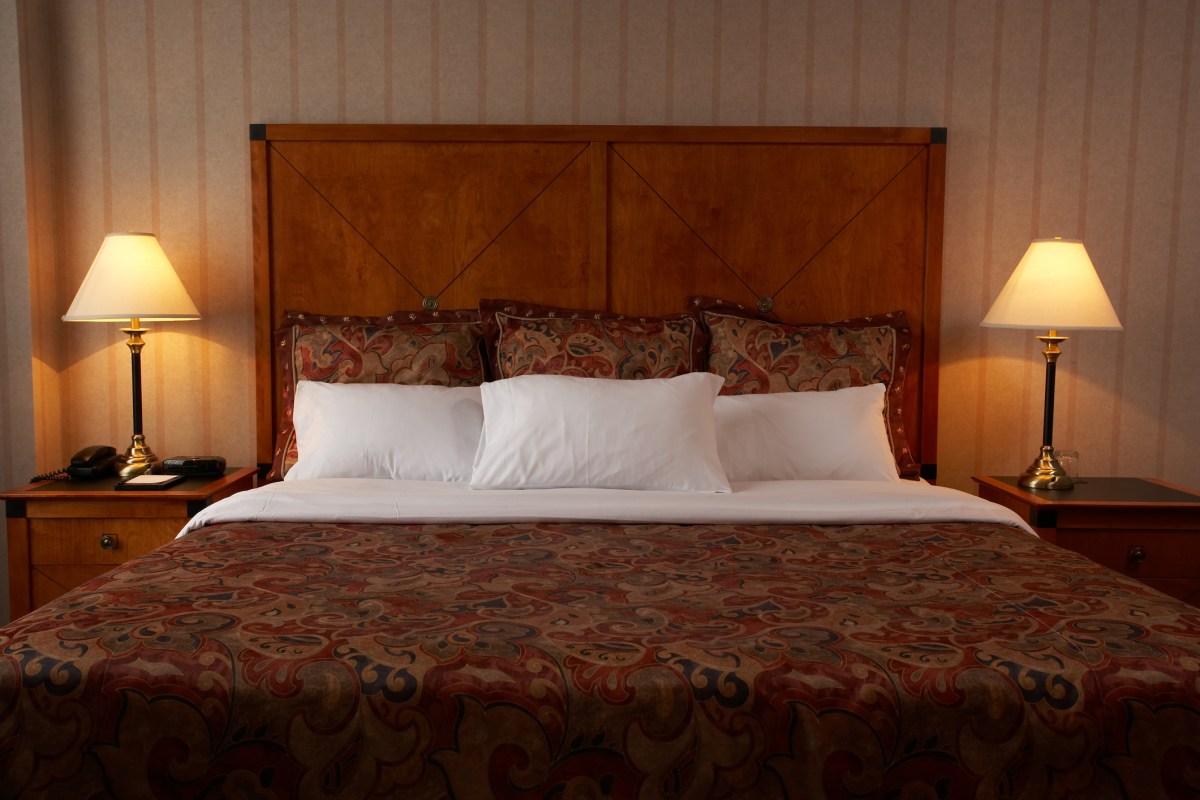
Dickinson hotels were half empty in 2015

Dickinson hotels were about half-full in 2015, according to year-end average data obtained by the Dickinson Convention and Visitors Bureau on Wednesday.

Terri Thiel, exective director of the Dickinson CVB, said hotels in Dickinson averaged about 48.2 percent occupancy during 2015, which is down from 71.5 percent occupancy in 2014.

Those numbers are a bit lower than average and close to 2005 figures — long before the oil boom hit the area and when Dickinson had nearly 800 less hotel rooms.

Thiel said the TownePlace Suites by Marriott in north Dickinson, the city’s newest hotel, plans to open Feb. 2.

Permanent fix: Richardton-Taylor school officials propose $15 million remodel

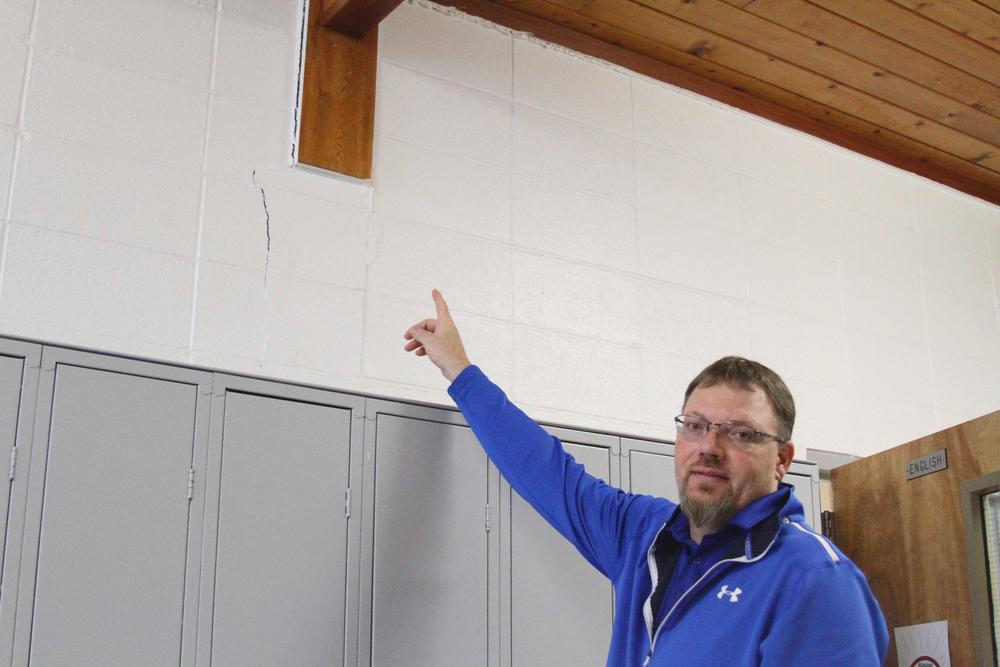
Brent Bautz walks out of his office at Richardton-Taylor High School and points to the ceiling.

There, the school superintendent shows where brick is cracked, displaced and appears to be pulling away from wooden beams, some of which have large cracks in them.

The school building that houses the district’s 130-plus junior high and high school students is 55 years old and, Bautz and others believe, needs to be replaced.

“A lot of people, they don’t realize when you walk down the hall and you see that stuff,” Bautz said. “When people come here most of the time, it’s just for games. Of course we always want everything to look nice. People say, ‘Oh there’s nothing wrong with the school, it looks fine.’ But foundationally, we have some issues.”

Bautz said Wednesday the school district is in the early stages of discussing a possible $15 million remodel of the existing school, which would include tearing down the south wing and reconstructing a two-level building in its place, and an almost complete overhaul of other parts of the building.

The project, which would require a bond issue, includes adding a multipurpose gym that could double as a cafeteria and commons area, a new band and choir room, a remodel of existing locker rooms, and a new secured entrance near administrative offices.

EAPC Architects Engineers, a Bismarck firm, recently finished a 40-page assessment of the building and described its issues in plain terms.

“In general, the high school buildings have significant structural and foundation deficiencies that include life safety concerns,” the firm wrote in its executive summary.

The report also found multiple areas of the school out of compliance with Occupational Safety and Health Administration and the Americans with Disabilities Act.

Duane Zent, Richardton-Taylor’s school board president and an area farmer, said the board believes the plan to tear down the south wing and build a new structure in its place is the most cost-effective way of ensuring the school’s future.

“The board feels like we need to build a new building because our building in such bad shape that to pour more money into it, it’s going to be an unending project and we’ll still have an old building at the end of the day,” Zent said.

Zent, who graduated from the school in 1976 when the building was just 15 years old, said he remembers hearing the school was meant to last 30 years.

“These old buildings are not designed for any of this,” he said.

Why the need

Despite the oil slowdown in western North Dakota, Richardton-Taylor’s enrollment remains up compared to five years ago and it’s still steadily growing with nearly 300 total students.

There are 134 kids in the 7-12 building, and 164 kids in grades K-6.

Preschoolers, kindergartners and first-graders are in the old St. Mary’s Catholic School building in Richardton, which is leased by the district for thousands of dollars a month, and second- through sixth-graders are in Taylor. The junior high and high school students are in Richardton.

After a remodel, fifth grade and up would likely be sent to the Richardton school with the rest of the kids going to Taylor, which would also have air system improvements through the use of grants funding and mills, Bautz said.

“With the Taylor facility, structurally it’s fine,” Bautz said.

Richardton Mayor Frank Kirschenheiter said he’s a proponent of the remodel because the school system is a big reason why people choose to live in and around the community. Richardton-Taylor has a history of success in both its academic and athletic programs — notably Student Congress, speech, one-act play and, of course, football and basketball.

“Before the oil boom, the only draw we had to get people to town was that school system,” Kirschenheiter said. “It’s a school system that’s as good as any in the state and we have to keep it that way.”

However, Bautz, the board and city leaders like Kirschenheiter aren’t sure how taxpayers will react to the remodel plans, especially in the wake of the oil slowdown and current low ag commodity prices.

Alongside the school project, the city of Richardton may be faced with a large street reconstruction project in the near future that would require special assessments.

Minor street work in the town of about 550 people started three years ago, Kirschenheiter said, when cost estimates were much higher. Now that it’s easier to find engineers and contractors to do the work, the city wants to push forward with projects.

Like the school, the city’s streets were completed in the 1960s. Kirschenheiter said they’ve only had one chip-and-seal project done since.

“We don’t want it to be a burden on our taxpayers,” Bautz said of the proposed school project. “And that’s what’s so frustrating about it.”

Bautz and Zent said the school wants to have its plans for the remodel in order before they’re present to the public. No discussion for the project outside of regular board meetings has been set.

“We want to make sure … when we start going out and talking to the public that these are the right numbers, this is what we’re looking at, this is what it’s going to do to your taxes and that it’s a doable thing,” Bautz said.

Kirschenheiter, who said his grandfather told him “I paid for the school to educate you,” said he has similar feelings now that he’s in that position.

“It obviously is in need of repair,” Kirschenheiter said. “It has outlived its useful life in my opinion. Something has to happen.”
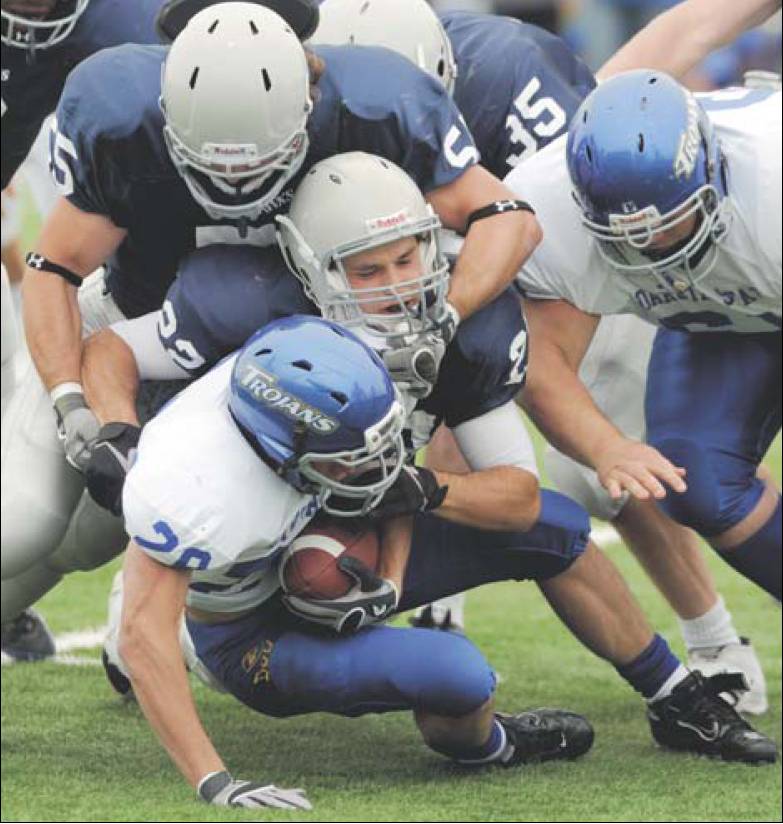
Concussions have forced talented DSU athlete Trevor Willis to give up football

Cordial Competition: Friendly Rivalry Encompasses Jockey Brothers

Jordan and Jake Olesiak don’t like to jockey for position.

When it comes to racing at the North Dakota Horse Park, the Olesiak brothers prefer to keep their competition clean, with a hint of family rivalry.

“We just play around,” Jake said. “It’s fun when you’re racing together.”

The jockeys, from Cloquet, Minn., have become familiar faces this summer at the North Dakota Horse Park.

Jake, 18, is in first place on the NDHP’s jockey money leaders list, while 22-year-old Jordan has the most first-place finishes.

Jordan took over the top spot on the wins list this past weekend when his brother left for two days to compete in races at the Carlton County (Minn.) Fair – the place both brothers began their jockey careers.

Did Jake mind that heading into the weekend that his older brother and mentor would take over his spot?

“It doesn’t bother me at all,” he said with a smile.

After all, bitter rivalry isn’t the nature of the Olesiak family.

“They always try and they’ve always got their head on straight,” horse owner Bud Partridge said. “They ride with nerve.”

Laurie Olesiak usually drives her boys to and from the NDHP and Canterbury Park in Shakopee, Minn.

“I probably wouldn’t be here today if my mom wouldn’t drive us around,” Jordan said. “She drives, we sleep.”

Racing is in the Olesiak’s blood. The brothers began horseback riding on their great-grandfather Wilson House’s farm as soon as they could walk. As soon as they were ready, they wanted to race.

“It was totally their choice,” Laurie said. “It’s all they ever talked about.”

According to their mother, Jake was on his first horse when he was one-and-a-half years old. He took to it like a natural, resting his legs in an upward position associated with many jockeys.

“He automatically did it,” Laurie said. “He was ready to go.”

Now, Jake is a full-time jockey and Jordan splits time between riding and training horses. There’s also two Olesiak brothers who stick to the training aspect of the sport.

Justin Olesiak, 20, trains horses at Canterbury Park and the NDHP but is taking time off after breaking his arm during a training accident.

The eldest Olesiak son, 24-year-old Jesse, is an assistant trainer under longtime Canterbury Park trainer Dave VanWinkel.

“It makes me happy,” Laurie said. “They’re all doing something they like to do.”

With the help of his brothers, Jake is competing with some of the best jockeys in the Midwest.

This summer, the Cromwell (Minn.) High School senior has already won more than $30,000 at NDHP and more than $62,000 at Canterbury Park.

“I’ve had it good,” Jake said. “My brother has taught me everything I know.”

Jordan, who measures 5-foot-8 and 124 pounds, is too heavy to jockey at Canterbury Park. However, he can still compete at the NDHP.

Jordan said he’d like to drop a couple of pounds so he can compete at Canterbury again.

“I’ll get it down,” he said.
Jake is about 5-foot-5 and has kept his weight steady at 113. He isn’t too worried about his size.

“He said he’s not going to abuse his body that way,” Laurie said.

Regardless of how they’re jockey careers turn out, both said they’d like to stay involved with horse racing their entire lives.

“If you love what you do it makes it pretty easy,” Jordan said. “I’ll do it forever.”

Along for the Ride: Hermanson Cousins Carry on Bull Riding Family Tradition Together

HAWLEY, Minn. – Cole Hermanson had a feeling Huff & Snuff was due.

The 18-year-old bull rider didn’t fret when he drew the bull which had never been rode.

He wasn’t fazed when the animal tried jumping out of the chute either.

Hermanson simply locked in and clocked an eight-second ride and a score of 83 to move into the top spot after the first day of bull riding at the 46th annual Hawley Rodeo, a National Professional Rodeo Association sanctioned event.

“I knew he was going to turn back,” said Hermanson, who said he’d watched Huff & Snuff several times. “He always jumps back.”

Bull riding has been a family affair for Cole and his cousin Justin Hermanson as long as they can remember.

The two grew up watching their fathers and uncles ride – Justin’s father, Darrell, is a former high school national bull riding champ – and have carried on the tradition.

“It’s been a family thing all my life,” said Justin, who rides today, the second day of the Hawley Rodeo. “It’s in my blood.”

The Hermansons are two of over 20 bull riders competing this weekend at the Historic Hawley Rodeo Grounds.

Justin, 23, is the NPRA money leader in bull riding, having already earned more than $5,300 with half the season remaining.

Cole is in second place with about $3,500, but has balanced time between NPRA and North Dakota High School Rodeo Association events throughout the year.

Incidentally, Cole is the points leader in the NDHSRA and will go for his first high school title next week at the North Dakota high school finals rodeo in Bowman.

“It’s pretty neat seeing me and him on the top of the standings,” Justin said. “It’d be nice to see that at the end of the year when it’s all said and done, too.”

The Hermansons’ you-and-me attitude gives the cousins traits more associated with brothers.

“We spent a lot of time together growing up,” Justin said. “We’ve always been pretty close.”

Over the school year, Cole, a native of Mandan, N.D., even moved to rural Litchville, N.D., to live with Justin’s family and help around their farm.

“I get my stuff done at school,” said Cole, who left Mandan High School last year and will be a senior at Litchville-Marion High School in the fall. “It’s a lot easier.”

It also means more bull riding chances for both Hermansons.

Since Justin graduated from Southwestern Oklahoma State in 2004, Cole said he’s found it easier to attend rodeos outside of the area.

“It’s a lot easier if I start going to big stuff. I’m with someone who knows people,” Cole said of his cousin.

While Cole is starting to become more acclimated in bull riding, Justin has cemented himself in the sport.

Justin has competed in several large events, including Professional Rodeo Cowboys Association rodeos in Cheyenne, Wyo., and Salinis, Calif.

But he admits he still has room to improve.

“I broke four ribs (at Cheyenne),” Justin said with a laugh.

Cole recently received his PRCA permit and said he’ll attempt to earn his card and compete in more difficult rides in the near future. He’ll do it with his cousin by his side.

“He’s got all the talent in the world,” Justin said. “He can make a living riding bulls.”