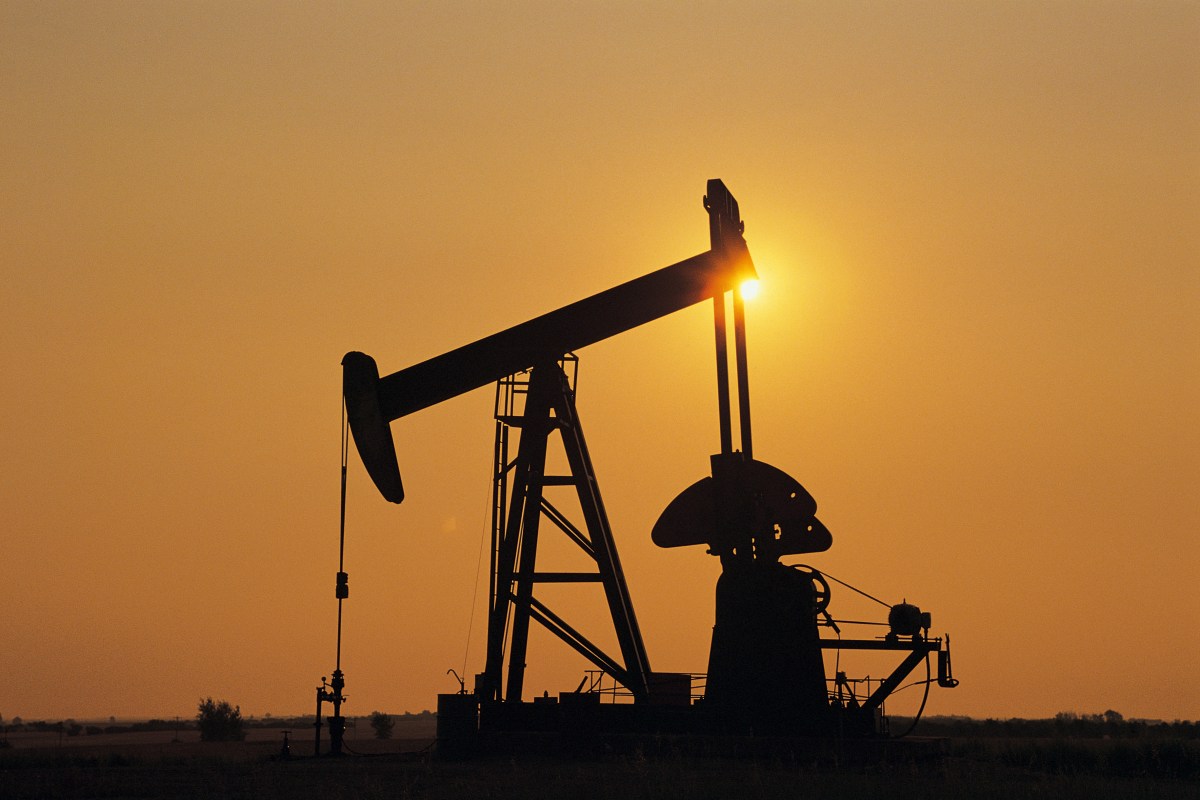
Whiting CEO: We believe in the Bakken

Volker says oil companies still profiting despite lower oil prices

BISMARCK — The chief executive of North Dakota’s largest oil producer said Wednesday that his company is still making big money on Bakken and Three Forks wells despite the industry’s economic downturn.

Whiting Petroleum Corp. President and CEO Jim Volker said during the second day of the Williston Basin Petroleum Conference that he foresees a gradual upturn for the state’s oil industry as crude prices steadily creep upward and more drilled but uncompleted wells are slowly brought into production.

“We’re a big believer in the Bakken, not only its future but even where we are today,” Volker said. “This is why we believe so much in the Bakken. We put our money where our mouth is here.”

Volker pointed to technological improvements for allowing production companies to operate with fewer rigs, allowing them to continue investing in the North Dakota Oil Patch — even if it’s not at the same rapid pace as years prior.

Volker said even at Wednesday’s price of about $50 a barrel — a comment that drew applause from the crowd — a Whiting well is still projected to produce a future net revenue of $27 million at a cost of about $7 million.

Whiting produced more than 4.1 million barrels of crude from nearly 1,500 active North Dakota wells in January 2016. In Stark County, the company had 131 wells that produced around 180,000 barrels.

“This is all happening with improvements in technology and improvements in the way we drill and complete,” Volker said. “Not only are we cleaner, we’re more efficient and we’re doing it for less money.”

Don Hrap, president of the Lower 48 states for ConocoPhillips, echoed that in his keynote address later in the day, as he said innovation and entrepreneurialism created out of necessity by the 2015-16 oil price downturn will make the industry “smarter, better and more efficient.”

“I think that technology innovation is what brought us this renaissance and also it’s what’s going to support us as we move forward,” Hrap said.

Hrap showed charts detailing the ups and downs of oil over the past 150 years, and said while this recent price drop is one of the most sustained in history, it could lead to more level and sustainable long-term prices.

“As we adapt and adjust, we have a tendency to provide the supply that’s needed that kind of moves us to a lower price,” he said. “That’s important to us, because it says we can’t count on $100 oil. We need an industry that’s supportive of a price that’s more moderate.”

Volker, meanwhile, wrapped up his speech with a summary of how Whiting recently paid down $500 million in debt.

Paul Steffes, CEO of Steffes Corp., a Dickinson manufacturing firm heavily invested in the production side of the oil business, said hearing that “certainly makes me feel good.”

“They’re a major player in the Bakken, so it’s an important piece for North Dakota to see Whiting be healthy,” Steffes said.

Lynn Helms, director of the state Department of Mineral Resources, said Volker’s optimism about pushing forward with a slow ramp-up is “consistent with what all the other operators are saying.”

Volker pointed out Whiting’s obligation to continue drilling wells, especially those on federal and tribal land, or risk losing their leases. Helms said those comments prove that rigs will continue to operate in the state, even if there’s only around 30. North Dakota had 28 drilling rigs as of Tuesday.

“I think that’s going to help the state to stay in this 30-rig paradigm that we’re in, because those drilling obligations are really expensive to walk away from,” Helms said.


Keystone XL denial affected Dakota Access Pipeline strategy, executive says

BISMARCK — The denial of the Keystone XL pipeline affected how the company building the Dakota Access Pipeline executed its strategy, one of its engineering executives said Tuesday at the Williston Basin Petroleum Conference.

Joey Mahmoud, the senior vice president of engineering for Energy Transfer Partners, said the $3.78 billion pipeline project now in the early stages of being built emphasized using labor unions and avoiding federal lands as the company watched Keystone XL fail to get built.

Mahmoud said 96 percent of the 1,168-mile, 450,000-barrel-a-day crude oil pipeline’s route from Stanley, N.D., to Patoka, Ill., is set and the project should be completed by the end of 2016. However, about 50 miles of the pipeline’s proposed route in Iowa are still awaiting approval and the U.S. Army Corps of Engineers still needs to approve river crossings.

“Developing a project of this magnitude in this economy, under this administration, has been very difficult,” Mahmoud said.

Continue reading “Keystone XL denial affected Dakota Access Pipeline strategy, executive says”

In lean times for oil industry, salespeople bear down

Joe Zayden, the Bakken region operations manager for Flow Data, had a booth Thursday, April 15, 2016, at the Bakken Oil Product & Service Show at the West River Ice Center in Dickinson. He said his company is weathering the slowdown by “basically just trying to maintain what we have.” Dustin Monke / Forum News Service

Charnel Zetsch came to Dickinson State University on a softball scholarship seven years ago.

She arrived in the early days of the oil boom and eventually found herself working in the energy industry.

Today, she’s a district sales manager for Magid Glove & Safety and is among several industry salespeople who are asking questions like this: “Why are you paying for a $10 glove when you could be buying a $2 glove?”

After all, with oil prices hovering around $40 a barrel at best, these truly are lean times in the North Dakota energy industry.

That point was drilled home at the Bakken Oil Product & Service Show this week in Dickinson. The trade show drew far fewer exhibitors than it did last year and, aside from some peak traffic moments, was considerably slower — just like the western North Dakota oil and gas industry.

Zetsch, who didn’t have an exhibit at the show, spent much of Thursday walking the West River Ice Center interacting with other oilfield industry salespeople to get a sense of how their businesses are doing.

“It’s tough right now,” she said. “We’re all kind of feeling this pressure. I think what most people are doing right now is really just ramping up and going back and looking at standard operational procedures. Whether it be inventory or the service side of things, they’re really trying to figure out where they were shorthanded and where they were super heavy-handed and try to balance the two.”

Tim Liston, who works in business development for Industrial Measurement and Control, said his company is looking at alternative ways to increase business. He said he made some good leads at the show and his booth drew attention because his company showed off its customized lease automatic custody transfer unit — a device that accurately measures oil.

As expected, Liston said business on the oil and gas production side has dropped off considerably. However, he said midstream companies — those who work with pipelines, refining or trucking — “are still spending money.”

“We’re looking for companies who still have project money available and they’re still going ahead with projects,” Liston said. “… That’s where I’m spending my time.”

The same was true for Winters Instruments sales representative Peter Chronis, who stood behind a table stocked with pressure gauges of all sizes and tried to make some connections.

The company, which has nine offices around the world, sells pressure instruments on every end of the oil production process. But, because the production is slower than a year ago, Chronis said he’s taking the opportunity to “lock in” to current customers who are still spending money, just not as much as they did during the boom years.

“It’s a double-edged sword, depending on which side of the market share pendulum you’re covering,” he said.

Joe Zayden spent two days at the trade show and called it “the slowest one I’ve been to in a couple years now.”

Zayden is the Bakken region operations manager for Flow Data, a Colorado-based company that manufactures and engineers products for wellhead automation. Though oil production in North Dakota hasn’t dropped off much in spite of the drilling drawback, Zayden said his company is weathering the slowdown by “basically just trying to maintain what we have.”

Zayden said his company is positioned well enough to pick up business from smaller wellhead service companies that are folding in the wake of the drop in oil prices.

And like most of the oil industry workers at the show, he remained confident that business will eventually pick up.

“We ain’t going anywhere,” Zayden said. “We’re not shutting down. We’re staying here.”

Monke: Obama's silly oil tax just another ego trip

When you ask three members of Congress the same question about a proposed policy and every one of them laughs about it, you know it can’t be good.

That was the case when I interviewed members of the North Dakota Congressional delegation about President Barack Obama’s proposed $10.25 per barrel oil production tax in his 2016 spending budget.

Republican Rep. Kevin Cramer called the tax “dead on arrival.” Sen. John Hoeven, also a Republican, believes it would go so far as to threaten national security. Sen. Heidi Heitkamp, a Democrat, said trying to impose this kind of tax on the oil industry right now was like kicking someone when they’re down.

All three of them agree it would mean thousands of lost jobs across the country.

And for what? More “environmental progress” as the president himself put it last week?

Look, I’m all for green energy and agree that we need an all-of-the-above energy strategy in this country. We know wind farms can work and earlier this year, I visited Yuma, Ariz., a city where solar panels are a common sight to see on rooftops.

Green energy is good energy. But there’s only so much we can do with it right now as a country.

Cars don’t run on hopes and dreams, and plastic isn’t created by fairy dust. Oil does that. Not wind. Not sunshine. Oil.

Obama said during a Feb. 5 press conference that Americans need to wean ourselves off “dirty fuels.” And that by doing this, and implementing this tax, it’s going to make for a stronger economy. “A wise decision for us to make,” he said.

I’m not sure our president understands — or for that matter, cares — about how much the oil industry matters to the American economy. Heck, I didn’t understand it until the industry planted itself in western North Dakota.

At that Feb. 5 press conference, Obama touted more fake job numbers handed to him by some lackey at a government agency being paid to create them for him out of thin air. But, you never heard one peep about the job boom created earlier in his presidency by shale oil production in North Dakota and Texas. Because he wanted nothing to do with it.

Now, with the oil industry on the downslide, Obama is doing what all good environmentalists do — he’s going for a killing blow and he’s trying to do it through government policy. Even though he’s highly likely to swing and miss on this one.

This pipe dream of a tax isn’t aimed at building roads and creating self-driving cars, as the president claims. It’s an ego trip wrapped around his radical agenda that the majority of Americans don’t even agree with.

Let’s hope Congress has some sense and tells Obama to kick this can down the road and straight into his recycling bin.

Target Logistics to temporarily close Dunn County crew camp

MANNING — Target Logistics is temporarily closing its massive crew camp in southern Dunn County, the company said Wednesday.

Citing dwindling capacity and low oil prices, the company says plans to close the nearly 600-bed crew camp 8 miles north of Dickinson and reopen in late spring or early summer.

“The capacity is down, somewhat due to the oil situation and somewhat due to the weather,” said Randy Pruett with Pierpont Communications, which provides media relations for Target Logistics. “This is not uncommon throughout the crew camp industry.”

Pruett said he didn’t know exactly when the camp was closing, but said those staying there were being relocated to other Target Logistics properties in North Dakota.

The news was announced earlier in the day at the Dunn County Commission meeting.

Continue reading “Target Logistics to temporarily close Dunn County crew camp”