[fcc_jw_player key=”ovzeCHJk”]
One of the nation’s leading commodities market regulators said Monday he’s confident the American energy industry can remain stable through the current period of lower oil prices, despite what overseas competition believes.
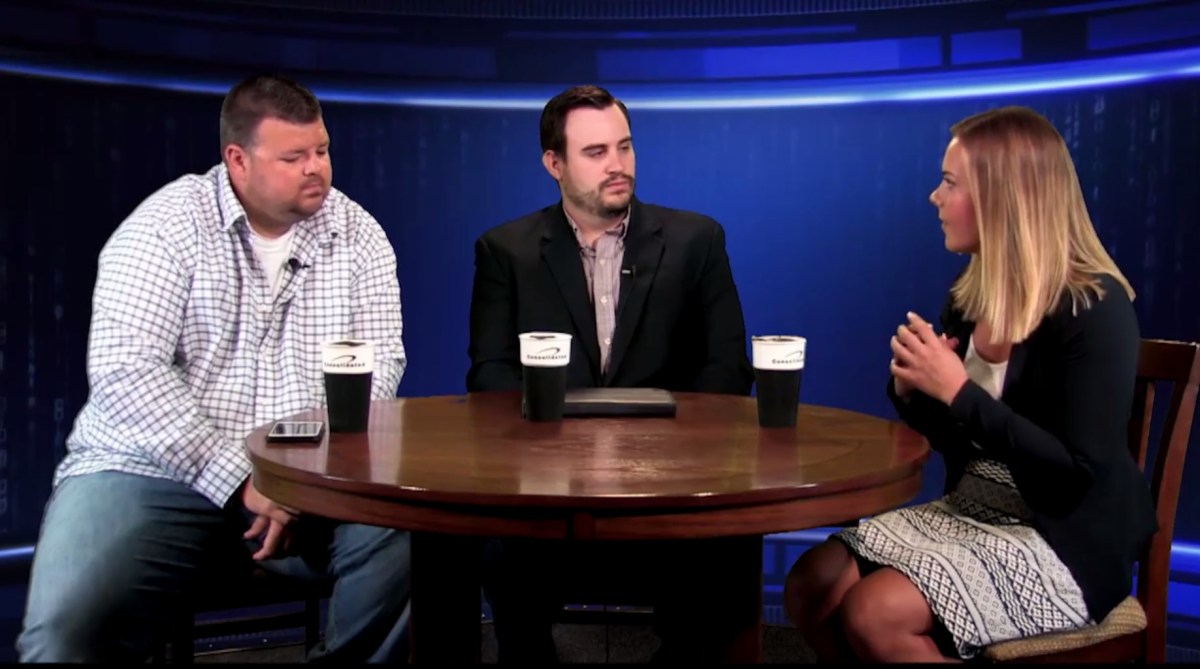
Christopher Giancarlo, a commissioner on the U.S. Commodity Futures Trading Commission, discussed North Dakota’s role in world oil markets with Sen. Heidi Heitkamp and two of the state’s energy industry leaders at the Dickinson Public Safety Center before getting an oil rig tour in Dunn County.
“Some of our overseas competitors are hoping we can’t wait it out — that we can’t wait out the low prices,” Giancarlo said. “I think they’re going to be surprised when they see this type of ingenuity, preparing ourselves for the lower prices. We can wait it out.”
Giancarlo received a crash course in the state’s oil and gas industry Monday as part of a visit to the upper Midwest that also included agricultural stops in western South Dakota and northwest North Dakota.
“You can’t really understand how to assist a business with the regulatory concerns if you don’t actually understand how they make their money, how they get up in the morning and put food on the table at night,” Giancarlo said.
‘All about survival’
North Dakota Petroleum Council President Ron Ness and Justin Bethancourt, the Bakken operations and maintenance superintendent for ConocoPhillps in Dickinson, gave Giancarlo a nuts-and-bolts walkthrough of how the North Dakota oil industry came to be and how its economy has been shaped by the most recent boom of the past decade.
Giancarlo said a sluggish world economy is keeping oil prices from climbing back to levels seen when the Bakken oil play boomed. He said volatile currency prices around the globe have spilled over into commodity prices of all kinds and has forced producers to hedge their risks.
“You guys have done enormous, fantastic work in supply — both in terms of discovery and production, and then also in terms of productivity and efficiency,” Giancarlo said. “So the supply side of the equation is in really good shape. The problem is the demand side. The demand side is caught in this sort of sluggish global growth that we’re seeing across the western world, across the developing world. Part of the times we live in right now is that anxiety over that missing global growth.”
Ness and Bethancourt said an oil producer’s ability to drill more than a dozen oil wells on a single well pad, an unheard of practice of at the start of the Bakken oil boom, has helped drive profits while lowering production costs.
“I do come away proud of American ingenuity,” Giancarlo said. “The ability to first ramp up and then build this amazing infrastructure. Then, almost as a reward for their success, to see the fall in prices and then once again readjust to that is tremendous. I don’t know if any other country in the world could have done what we’ve done. But we’re a victim of our own success in some ways.”
Ness said oil companies involved in the Bakken shale play are in a better place now than they were at the beginning of 2016.
“The independents, their stock value has been decimated, their balance sheets have been decimated,” he said. “If you would have been here in January or February, we were at risk of losing two or three of our top-five producers to bankruptcy.”
Ness added later that one of the latest trends in the state’s energy market is that operators are selling interests in their drilled-but-uncompleted wells to hedge funds as a way to finance wells that haven’t been brought into production.
“At this point, it’s all about survival,” he said.
Saudi Arabia’s role
Heitkamp and Giancarlo also delved into Saudi Arabia’s role in guiding the world oil markets. The senator said she frequently hears from North Dakotans who are quick tell her the Saudis are forcing oil prices down in an effort to push the American shale producers out of the market.
“I think the Saudis have been driving the market down. I’m not convinced the Saudis can drive the market back up,” she said. “At some point, they’re going to have more competition than what they want.”
Giancarlo and Heitkamp both said the Saudis, much like North Dakota, are creating value-added industries to help them move past this period of lower oil prices instead of relying solely on crude oil production.
Heitkamp said she also believes the Saudis have recalibrated their long-term price expectations.
“They’re looking at this as transitional,” she said. “They’re trying to figure out what the new Saudi economy is going to look like. They look at the long-term trends in supply and demand.”
Giancarlo added that the Saudis are fine with prices where they are right now “because it’s causing all this pain in the most innovative oil production area in the world, which is right here. It’s causing a lot of pain. It’s an ideal situation for them to be in. They want to maintain their distribution relationships.”
 Dustin Monke