Post-Oil Boom, There’s ‘More Dope Than Ever’ in Bakken

[fcc_jw_player key=”xMD18JHP”]

The Bakken oil boom may be over, but people on the front lines of fighting crime in western North Dakota say drug trafficking here is worse than ever.

The price of drugs is dropping and an influx of out-of-state gangs are intensifying the problem, a lead agent with the North Dakota Bureau of Criminal Investigation says.

“Because the oil industry has slowed down, people automatically assume the drug world has slowed down. What we’ve found out is that’s absolutely not the case,” said Rob Fontenot, a BCI agent and member of the Southwest Narcotics Task Force. “There’s more dope here now than there ever has been.”

There’s been a 75 percent drop in the price drug traffickers are getting for methamphetamine, Fontenot said. Plus, deadly fentanyl-laced heroin has spread from eastern North Dakota to the Bakken.

The plummeting price of meth because of its prevalence in western North Dakota has led to it being trafficked and sold in greater quantities. Fontenot said meth that was going for $3,300 an ounce in the height of the oil boom is now worth about $800 an ounce on the street.

“I never imagined in my law enforcement career — and I’ve been working dope for 14 years — that I would see meth for $800 an ounce,” he said.

U.S. Attorney for North Dakota Chris Myers said it’s obvious by his office’s caseload that drug cases in the Bakken aren’t slowing down.

“There’s a myth outside of our state,” Myers said. “People believe that because oil activity has slowed, that the criminal activity has stopped. That’s just not true. It definitely has not slowed down and there’s a good argument to be made that it’s continuing to increase.”


Gangs at the center

Dickinson Police Capt. David Wilkie said the known gang activity in the city isn’t stereotypical of what most people think it would be.

While there are gang members in Dickinson, he said — notably, the Country Boy Crips out of Bakersfield, Calif. — they’re not here in droves.

“The gang is down in (California) and they’ve got a couple guys up here that are accepting packages for when they send dope up here. These guys are using the local guys, or doing it themselves, to sell drugs,” Wilkie said. “They’re not out recruiting, they’re not taking up turf and they’re not embezzling or asking for protection money from people. But they’re definitely here.”

Fontenot said many one-percenter motorcycle gangs — the clubs who self-identify as outlaws and criminals — have a presence in western North Dakota as well.

He said the Hells Angels have an interest in the state, and the Bandidos and the Outlaws are already here. Wilkie added that the Prairie Rattlers gang has also taken up shop in western North Dakota. The Chicago-based Gangster Disciples street gang is also in the state, Fontenot said.

“They’re not out flying their colors, but they are here,” Wilkie said. “Anytime they are here, they have the potential to do gang activity or be the front for the club.”

The Country Boy Crips have had a presence in the area since the summer of 2013, according to federal court documents. Many with that gang affiliation were indicted on drug-related crimes during an Bakken Organized Crime Strike Force sweep of 29 defendants in August 2015, Myers said.

Gang-related gun crimes also consistently happen in western North Dakota, though they rarely lead to arrests.

There was a brief shootout on April 30 between multiple African-American men with alleged gang ties in a Dickinson mobile home park. The incident left a 59-year-old man, who was in his home during the shootout, injured by stray bullet. Dickinson police say while they continue to investigate and search for the suspects, they’ve made no arrests in the case and have encountered several uncooperative witnesses.

In November 2015, 30-year-old Roger Falana — who Minot police say had gang ties in Florida — was shot and killed. The murder suspect, 26-year-old Johnny Cleveland Norwood Jr., was finally arrested Friday in Las Vegas.

The most public gang-related crime in Dickinson history — the drive-by shooting murder of 37-year-old David Porter outside of Century Apartments on Nov. 16, 2014 — has still not been solved.

“A lot of times, this stuff is retaliation over a business dealing they had or a disrespect,” Wilkie said.

North Dakota Senate Majority Leader Rich Wardner, a Dickinson Republican, said he’s encouraging local law enforcement and the BCI to be transparent about incidents like these because, he said, “the community needs to know.”

“We have to work with the law enforcement to know what we can share with the public,” Wardner said.


Prosecuting cases

Myers, who was appointed as the U.S. Attorney for North Dakota last October, said the Bakken Organized Crime Strike Force — a collaborative law enforcement program in North Dakota and Montana between federal, state and tribal law enforcement agencies — has been successful in prosecuting drug traffickers and other crimes in western North Dakota since it was formed last June.

“We’re planning to have meetings this summer in Bismarck and revisit where we’re at, where we’re headed and what we’ve achieved,” Myers said.

In June alone, three people were sentenced in federal court for crimes involving meth trafficking in western North Dakota.

Two Dickinson men — Rocky Laurence Fowler and Laquan Andre Thomas — are in the process of being indicted by a federal grand jury after their March arrests for the possession, distribution and intent to distribute heroin containing both fentanyl and furanyl fentanyl, a designer version of the powerful opioid.

Myers said every prosecutor in his office — including himself — carries a large caseload. The U.S. attorney’s office has prosecutors in Minot, Williston and Dickinson — the Bakken’s three largest cities — as well as in Bismarck. Bakken Strike Force supervisor Rick Volk is the prosecutor in Williston and works alongside the Federal Bureau of Investigation at its office there.

Myers said while he doesn’t have concrete figures, his office has prosecuted or is currently prosecuting “many large-scale, multi-defendant drug trafficking cases.” He believes when they compile figures later this summer, they’ll see an increase in cases involving transnational organizations doing business in North Dakota.

Wilkie said Dickinson police are trying to be more proactive in thwarting drug trafficking alongside the Southwest Narcotics Task Force, but is “just trying to keep our head above water with these issues.”

Wardner said he and other legislators are hoping that despite across-the-board cuts to state agencies, the BCI can maintain its current budget.

He and other legislators met with BCI agents on Thursday to discuss funding and learn more about crimes the agency is investigating.

“They’re concerned about losing people,” Wardner said. “They are now finally in a position where they can confront this stuff. So if we can keep the BCI and local (law enforcement) — and the FBI is here now — and we can keep all those people working together, it’s going to help.”

Methamphetamine also known as crystal meth

Exec: Davis Refinery Not Affected by Dakota Prairie Refinery Sale

BELFIELD — The company trying to build an oil refinery just three miles from Theodore Roosevelt National Park in Billings County isn’t slowing down its efforts, even after the Dakota Prairie Refinery sold at a loss earlier this week.

Thomas Johnson, chief operating officer of California-based Meridian Energy Group, said Tuesday’s sale of the Dickinson diesel refinery doesn’t affect his company’s goal of building the Davis Refinery, which would process 55,000 barrels of Bakken crude a day.

“We did economic modeling, what our costs are going to be and concluded that we’re going to make some profits there in the Bakken and the Belfield area,” Johnson said.

Tesoro bought the Dakota Prairie Refinery from MDU Resources Group and Calumet Specialty Products, which broke ground on the refinery in 2013 and opened it in May 2015.

Johnson pointed to the Davis Refinery’s efforts to build a refinery that’ll produce gasoline, jet fuel and ultra-low sulfur diesel fuel as the difference between its plans and the Dakota Prairie Refinery, which processed 20,000 barrels of oil into around 8,000 barrels of diesel fuel a day, along with a set of byproducts.

MDU Resources spent $430 million on the refinery and reported that it lost $7.2 million in its first quarter of operations. The refinery’s construction was plagued by cost overruns and construction delays.

Johnson said he was involved in the building of PetroMax Refining, a 25,000-barrel-a-day refinery in Houston that opened last year, and said Meridian is using a similar business model with the Davis Refinery.

“We were successful last year, so we fully anticipate being successful this time,” Johnson said. “The key is not to get into a situation like Dakota Prairie. It’s unfortunate what happened, but it is a good lesson to learn.”

In an effort to rally community support for the Davis Refinery, Meridian is hosting a public gathering at 5 p.m. Tuesday atop Buck Hill, the highest point in Theodore Roosevelt National Park’s South Unit.

Opponents of the refinery have said it will be clearly visible from Buck Hill, and have used that as ammunition to stop it from being built.

“Basically, we want to give everybody kind of an opportunity to see that the view from Buck Hill towards the refinery,” said Adam Williams, Meridian’s director of corporate communications. “We’re going to have some surveyors out and we’ll be floating several large weather balloons at the exact height as the top of the crude tower from grade. We want to do all we can to give people an opportunity to see what the effects will be, or if there’s any visual line of sight from Buck Hill. My guess is it won’t be too visible from the naked eye.”

The Billings County Commission is scheduled to discuss the Davis Refinery for its third straight monthly meeting at 9 a.m. Wednesday. Williams said Meridian CEO Bill Prentice plans to attend the meeting, along with several other of the company’s key players.

Referendum for New Richardton-Taylor School Passes

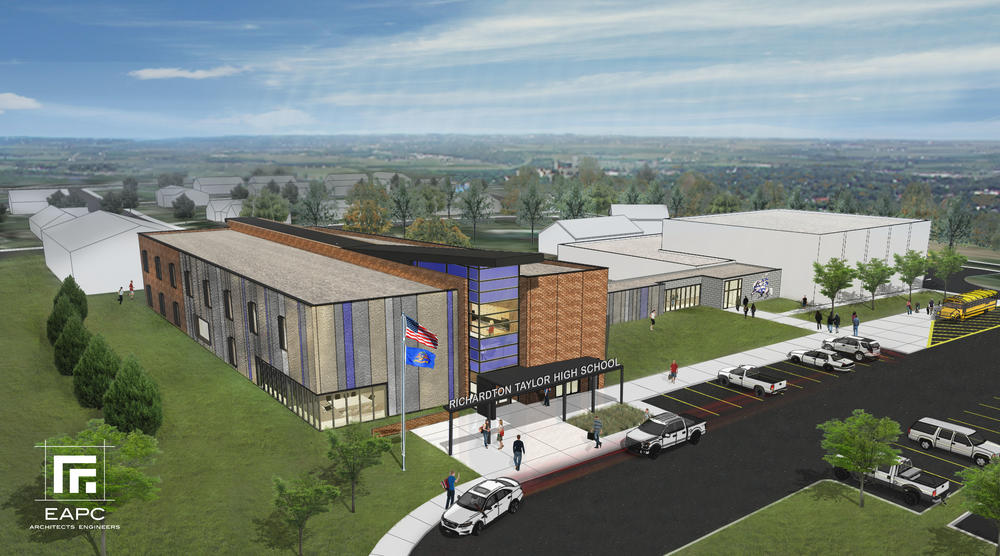
RICHARDTON — The Richardton-Taylor school district is getting a new high school.

Residents of Richardton and Taylor voted on Tuesday night to approve a bond referendum during a special election, though the results were clearly split between the two towns.

Sixty-five percent voted in favor of the $2 million bond referendum for the $12 million project. Curiously, nineteen less voters approved of raising the district’s debt limit by 5 percent to help finance the project with a $10 million loan from the Bank of North Dakota.

“We’ve been working on this thing for two-and-a-half, three years,” Richardton-Taylor Superintendent Brent Bautz said late Tuesday night. “We’ve put a lot of hard work into it. It’s good to finally realize it’s coming to fruition.”

The bond referendum needed a 60 percent “yes” vote to pass. It was decided by just 28 votes.

Vote tallies showed Richardton voters overwhelmingly supported the project while Taylor residents opposed it.

Seventy-three percent of Richardton residents voted in favor of both the referendum and raising the debt limit. Only 43 percent of Taylor residents voted for the referendum and 40 percent voting to raise the debt limit.

Bautz said the district needed to raise the debt limit because the North Dakota Century Code would have only allowed the district to borrow 5 percent of its assessed value, which wouldn’t have been enough for the project. The approve allows the district to borrow 10 percent of its assessed value.

Bautz said the district would like to begin construction on the project next spring with a scheduled completion by summer 2018.

Richardton-Taylor’s administration and school board approached residents about a remodel earlier this year because of decay in the 55-year-old facility and as a long-term cost-cutting move.

The current high school building in Richardton holds grades 7-12. The elementary school in Taylor has grades 2-6. Pre-kindergarten through first-grade students are in the St. Mary’s Social Center Building in Richardton, which costs roughly $72,000 annually in lease payments and additional staff.

With the referendum passed, pre-K through first grade will move to Taylor and grades 5-12 will be placed in Richardton.

Insight Interview With City Commissioner-Elect Sarah Jennings

[fcc_jw_player key=”7L5Zf1Ad”]

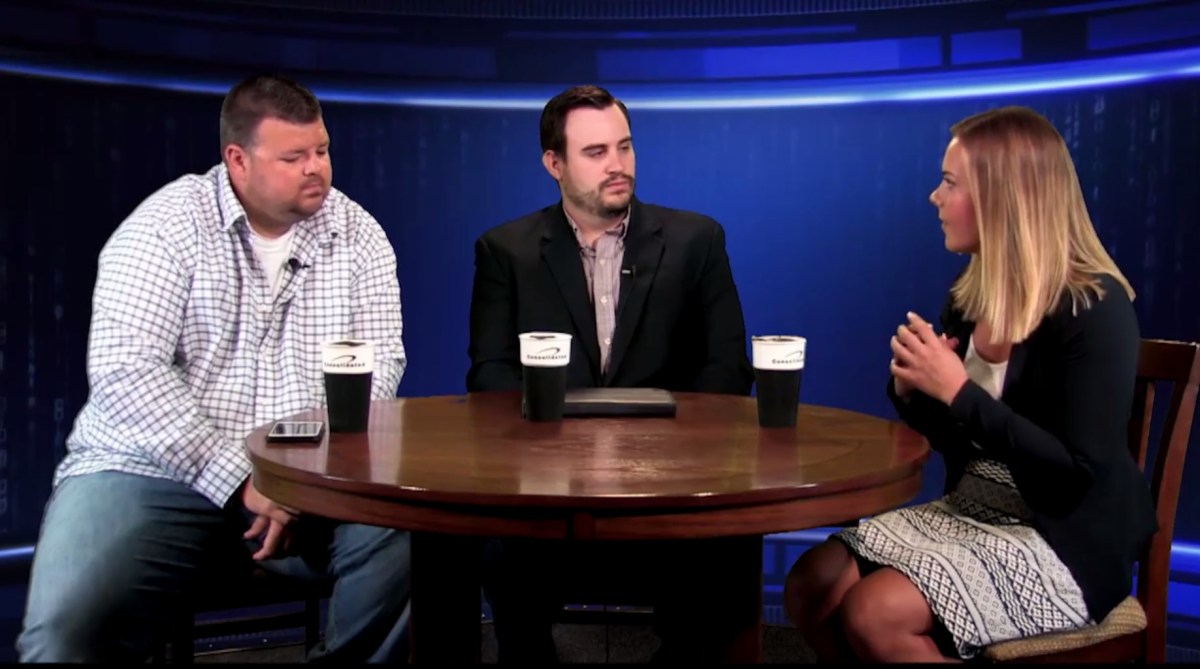
This week, Brock and I sat down to talk with Sarah Jennings, who was recently elected to the Dickinson City Commission at age 26.

Here’s the rest of the episode:


Mott-Regent Passes $8.7 Million School Bond Issue by Thinnest of Margins

MOTT — Mott-Regent is getting a new elementary school and making major improvements to its high school.

The district’s school board made that official Monday after a canvassing meeting found that 61 percent of the district’s residents voted in favor of the $8.7 million bond referendum. The project needed a 60 percent “yes” vote to pass.

Viola LaFontaine, the district’s new superintendent who is just settling into her role and doesn’t start full time until July, said she has heard the mixed opinions about the bond passing.

“When you get a vote this close, you know there’s opinions out there,” she said. “I’m hearing different things.”

The bond calls for a 32.01 mill levy increase, or about a $143 increase on $100,000 in residential property. Cropland will see an average tax increase of 93 cents an acre.

A total of 639 district residents in Hettinger, Adams and Stark counties voted on the bond referendum, with only 390 voting yes. It was such a thin margin, the school board waited to receive additional mail-in ballots at Monday’s canvassing meeting to officially announce the results. They received just one mail-in ballot.

Mott-Regent has 240 students in its system.

With the funding, the district will construct a new elementary school, remodel and renovate the high school building, and demolish the old elementary school.

Work could begin immediately, LaFontaine said. Though she and school board president Kevin Roth said the school is likely going to ensure all the legal aspects of the project are shored up.

“We’re not going to rush into anything,” Roth said. “We’re going to do our due diligence and do everything properly. Hopefully everything will come in under bid.”

Consolidated Construction was hired as the contractor at-risk for the project. LaFontaine said the company wants to start soil borings and sight surveys soon.

“Some of those things, I think we can do pretty quickly,” she said.

The school will officially approach the Bank of North Dakota this week about a 2 percent, 20-year loan.

“The main thing is we just move forward from here,” she said. “I’m a very open and willing to listen to people, and am looking to make this a positive move for the Mott-Regent School District. … This is an opportunity for the school to celebrate education.”

The district also canvassed the election of incumbent school board members Garret Swindler and Lucas Greff, as well as newly elected Jeremy Ottmar. All three ran unopposed.