Changing perceptions: CEO of company building $900 million Davis Refinery emphasizes environment

BISMARCK — Meridian Energy Group CEO Bill Prentice said his company wants to make southwest North Dakota home to an oil refinery that could change the industry, and he’s ready to win over the people trying to prevent them from doing that.

Meridian has proposed building the Davis Refinery in Billings County just west of Belfield and three miles from the outskirts of Theodore Roosevelt National Park’s South Unit.

The $900 million refinery would initially convert 27,500 barrels of Bakken crude oil into gasoline, diesel fuel and various refined products, and could expand to handle 55,000 barrels a day. However, Meridian’s plan expectedly has been met with pushback from park officials and environmental advocates across the state who believe the refinery would impact the park’s pristine air quality.

Prentice, speaking Tuesday at the Williston Basin Petroleum Conference, emphasized his company’s commitment to the environment and said in an interview that the industry eventually has to change mindsets of what it means for an oil refinery to move into an area.

“I think it’s going to define how the hydrocarbon processing industry looks at being a neighbor of everybody,” Prentice said of the Davis Refinery. “There’s no longer going to be this solution that you kick us out into some industrial ghetto. This industry has to know how to build a plant that can be right there (near the park), and that’s what we’re going to do.”

Continue reading “Changing perceptions: CEO of company building $900 million Davis Refinery emphasizes environment”

Keystone XL denial affected Dakota Access Pipeline strategy, executive says

BISMARCK — The denial of the Keystone XL pipeline affected how the company building the Dakota Access Pipeline executed its strategy, one of its engineering executives said Tuesday at the Williston Basin Petroleum Conference.

Joey Mahmoud, the senior vice president of engineering for Energy Transfer Partners, said the $3.78 billion pipeline project now in the early stages of being built emphasized using labor unions and avoiding federal lands as the company watched Keystone XL fail to get built.

Mahmoud said 96 percent of the 1,168-mile, 450,000-barrel-a-day crude oil pipeline’s route from Stanley, N.D., to Patoka, Ill., is set and the project should be completed by the end of 2016. However, about 50 miles of the pipeline’s proposed route in Iowa are still awaiting approval and the U.S. Army Corps of Engineers still needs to approve river crossings.

“Developing a project of this magnitude in this economy, under this administration, has been very difficult,” Mahmoud said.

Continue reading “Keystone XL denial affected Dakota Access Pipeline strategy, executive says”

Free kids books are back: Imagination Library program restarts in Stark County

Jessina Kary said she wasn’t sure what had happened when her son, Isaac, stopped receiving his monthly book through the mail from the Dolly Parton’s Imagination Library program.

She wondered if there had been a mixup in her address after her family had moved. It wasn’t until later that Kary and hundreds of others learned the program had lost its funding in Dickinson, leaving nearly 600 children ages 5 and under without the free book they’d come to expect and enjoy every month.

“He loved it,” Kary said of 4-year-old Isaac. “The first book he ever got was ‘Little Engine That Could’ and we still love that one because he still loves trains.”

Soon, Isaac Kary and kids across Stark County will start receiving their Imagination Library books again.

North Dakota First Lady Betsy Dalrymple helped announce the restart of the program Monday morning at the Dickinson Area Public Library and later read “Roar of a Snore” to a group of children.

“There’s nothing better that a community can do than to help give a gift to your children once a month,” Dalrymple said.

The Imagination Library program was brought back in large part because of a donation of $16,000 by WPX Energy, an oil and gas exploration company with a large stake in the Bakken. Their donation allows children in all Stark County cities except Belfield, which has its own Imagination Library program, the opportunity to sign up for the Imagination Library.

“I really want to tip my hat to them (WPX) for underlining the difference that this program can make in the lives of children,” Dalrymple said.

Imagination Library was launched in 1995 by Dolly Parton, a country music legend and actress, to benefit children ages 5 and under in her home state of Tennessee. It has since expanded to every state, Canada, Australia and the United Kingdom. Each month, children receive an age-appropriate book through the mail.

When Dickinson’s Imagination Library lost its funding, several interested parents and educators formed a committee to bring it back. With Dalrymple’s help and support from WPX, the program relaunched in April.

“There’s such a great need for this, so I’m glad we were able to get a committee together and get this going again,” said Lane Talkington, Dickinson’s children’s services librarian

Nearly 1,400 children in Stark County are eligible for the program, and the committee hopes to get every one of them signed up.

Chelsey Scherr, representing the Badlands Reading Council, works for the K.I.D.S. Program in Dickinson and said she sees the difference in children who are read to early and often in a world full of screens.

“What they really need is a parent who gets on the floor, plays with them and reads to them,” Scherr said.

Erica Crespo, part of the committee to help restart the Imagination Library in Stark County, held her 1-year-old son Vaile as they listed to Dalrymple and others speak.

She said she was disappointed when the program lost its funding around the time Vaile was born. Now that it’s back, they are signed up and awaiting his first book.

“It’s just an awesome program to promote literacy in our community,” Crespo said. “So many parents don’t know about this program.”


Cattlemen talk market volatility

Larry Schnell, owner of Stockmen’s Livestock Exchange in Dickinson, drew applause from his industry colleagues Friday when he said cattlemen are angered when traders use subtle deviations in the cattle markets and cause major price fluctuations that trickle down all the way to their operations.

“That’s why it’s so hard for us to accept that we should face the consequences of all the trading that takes place under the table, in the dark,” Schnell said. “That’s hard for us to accept. … These people here, they’re not a part of that. They only suffer the consequences of that trade.”

Many from the western North Dakota and South Dakota cattle industries gathered Friday morning at Stockmen’s to listen to Schnell and other industry leaders speak out on problems they see in the cattle markets at a forum hosted by U.S. Sen. Heidi Heitkamp, D-N.D.

Heitkamp, Schnell and five other panelists sat in the Stockmen’s sales ring — where cattle are typically showed for auction — as they discussed market concerns for more than two hours. Other panelists included Bowman rancher Steve Brooks, who is president of the North Dakota Stockmen’s Association; Justin Lumpkin, a U.S. Department of Agriculture marketing officer; Larry Kinev, president of the Independent Beef Association of North Dakota, and cattle buyer Fred Berger, of Mandan.

“What we were talking about here today isn’t, I think, about the high prices or the low prices,” Schnell said after the forum. “It’s about the volatility. It’s about the volatility where the market changes for what seems like no reason whatsoever.”

The managing director of commodity research for the CME Group, which operates the Chicago Mercantile Exchange, said the exchange is months away from fixing issues that cause excess volatility in cattle markets. David Lehman told cattlemen that the exchange, in the next couple of months, will implement market circuit breakers on live and feeder cattle to install limits on how cattle contracts are traded.

He said it should help ensure market integrity. The circuit breakers are intended to keep prices from skyrocketing or bottoming out based on volatile activity in the market regardless of the speed or way people are trading.

“Rather than a hard limit that stops the market, it halts the market,” Lehman said, adding it will trigger if live cattle prices move more than $1.50 during an hour, or $2.25 for feeder cattle.

Ron Volk, a rancher from the Sentinel Butte area, said he understands the reasoning for implementing the circuit breakers but told Lehman he doesn’t believe it’ll be a permanent fix for the market’s instability.

“It seems to me like we’ve got a broken leg and you’re trying to throw a couple Band-Aids on it,” Volk said. “I don’t see it changing anything. It’s prolonging the broken leg. Now instead of putting a cast on, you may have to cut the leg off.”

Lehman said he agreed that “the leg is broken,” but said circuit breakers already help deter volatility in many markets, including oil and precious metals.

He said the circuit breakers are being put in place to limit moments like one that happened last week when 175 feeder cattle contracts — nearly three times the average daily trades made — were traded on the Chicago Mercantile Exchange and caused cattle prices to drop significantly.

“That set off a cascade pushing the market down until it found the other bids or offers that could match this 175-lot order,” Lehman said.

The problem, the panel said, is the volume of electronic trading happening by hedge funds or others who normally wouldn’t trade cattle futures, but do so based solely on market deviations.

Schnell believes it’s “nerds writing programs who are looking for an advantage.”

“What some of those algorithms trade on is only the knowledge of the trade, not knowledge of information,” Schnell said. “To us, that’s insider trading.”

Mike Heaton, a McKenzie rancher and member of the Independent Beef Association of North Dakota, said those outside of the cattle and agriculture industries trading live and feeder cattle and causing volatile prices swings in the markets, are comparable to parasites.

“There’s a whole other world out there of people living off of our industry,” he said. “When we get no return on it, they’re like the parasite that I get rid of in my cattle.”

Heitkamp said the Senate Agriculture Committee — of which both she and Sen. John Hoeven, R-N.D., are members — is holding a hearing about the volatility in cattle markets Thursday in Washington. She said part of the reason for hosting Friday’s forum was so she could get an idea of what North Dakota cattlemen believe are the biggest issues.

“The more this marketplace does not work for the people in this room, the more difficult it’s going to be to manage it,” Heitkamp said. “The more people who pull out, the more irrelevant it is.”

Herman Schumacher, a cattleman from Herreid, S.D., challenged Lehman on the constant cattle market fluctuations and said he believes the issue comes back to hedge funds and the meat packing industry trying to build a greater stake in the market.

“We’re fighting to try and not chicken-ize the cattle industry,” Schumacher said, referring to the influence large corporations have on the poultry trade.

Schumacher said he thought the input cattlemen from the area had at the meeting was beneficial as Heitkamp and others take their issues back to Washington next week.

“The only thing that keeps us separate from them (the commercial meat packing industry) are these cowboys that you had sitting there,” Schumacher said, pointing to chairs behind him.


After all these years, Garth has still got it

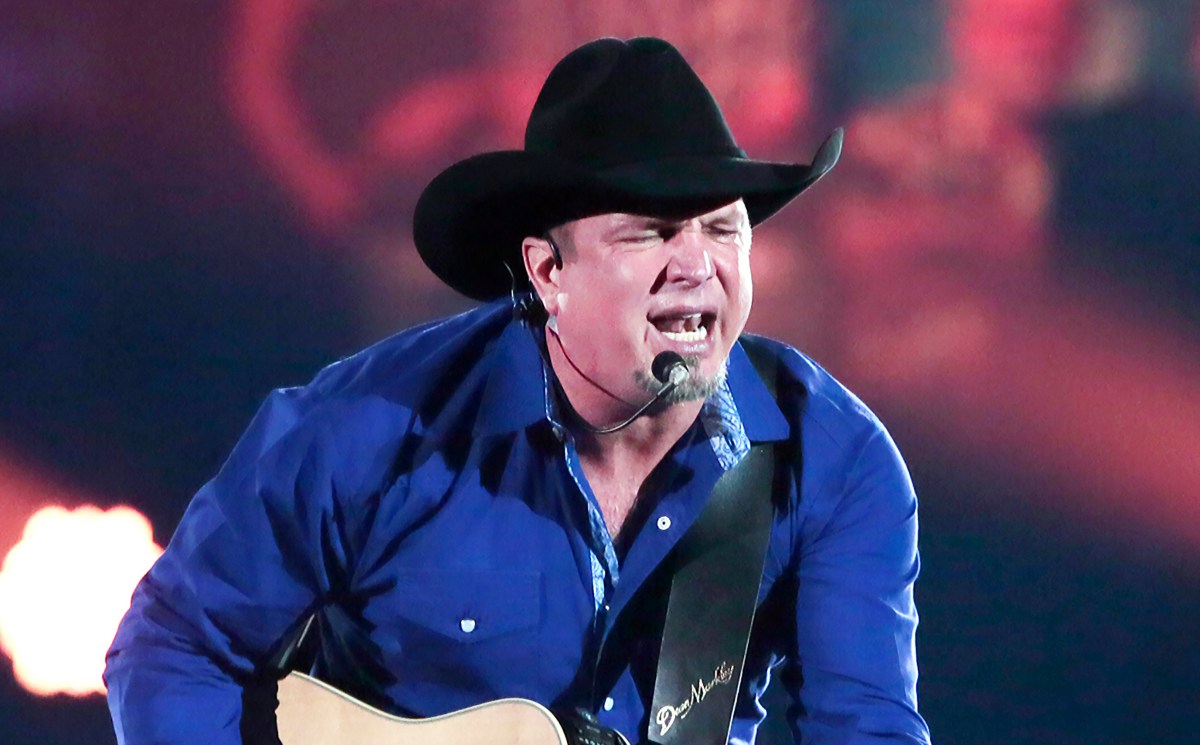
Garth Brooks performs Thursday, May 5, 2016, at the Fargodome. Dave Wallis / The Forum
Garth Brooks performs Thursday, May 5, 2016, at the Fargodome. (Dave Wallis / Forum News Service)

There’s nothing quite like a Garth Brooks concert.

The energy, the sounds, the crowds and, of course, the man and his music. The reason why thousands of people are all there, screaming and singing along.

For my generation, there are only a few iconic performers who absolutely must be seen live. Garth Brooks is near, if not at, the top of that list.

For me, it was a 25-year wait to see the country music legend live in concert — perhaps for the final time — last Saturday when my wife and I went to his third of four shows at the Fargodome with a group of friends.

Regardless of if you’re a huge country music fan or just know his songs in passing, there’s no denying the man is a showman. At 54 years old, you’re afraid he’s going to have a heart attack the way he runs around the stage and mixes his energetic character into his musical performances.


I had been to a Garth Brooks concert when I was very young and shortly before he became a worldwide superstar, though I obviously don’t remember it well.

When I was 13, my family had tickets to one of the four sold-out Garth Brooks concerts at the Bismarck Civic Center. I was obviously excited and even though I was fighting the flu, told my parents I was going. Unfortunately, the illness got the best of me and, thanks to some nice security people, I ended up spending the concert sleeping on a couch in someone’s office in the bowels of the Civic Center so my family didn’t have to miss the show.

That tour ended up being one of the biggest in music history and came at the height of Garth’s fame. The Academy of Country Music has named him entertainer of the year six times. The  Country Music Association has awarded him the same honor three times. One of those years was 1997, mostly because of the Garth Brooks World Tour that spanned three years and shattered concert tour records.

Needless to say, I was ready to finally see the man live in concert.

[fcc_jw_player key=”y0uZYECr”]

Sitting behind and to the right of the stage, we were obviously a little worried about the seats. Our friends told us not to worry. They’d been to a different concert on this version of Garth’s tour with his wife Trisha Yearwood.

Of course they were right. The show was second-to-none, with 2½ hours of music and an intimate encore acoustic set that changes every night.

One of the most touching moments in ours came as Garth sang one of his biggest hits, “The Dance.” During the song, he pointed the house cameras toward two people in the crowd who had signs for their mom, Joyce, who was a huge fan but had passed away. Their signs said “Thanks for Being a Part of Joyce’s Dance” and had a picture of Garth and Joyce together. Garth got choked up as he sang.

I get goosebumps again just writing about it.

Today’s country music stars should watch a Garth Brooks concert and take notes. Few artists today have the ability to mix poetry and gravitas in their songs and lyrics like Garth, who doesn’t write all of his songs but co-wrote many with a select group of songwriters over the years.

Unfortunately we’re listening to a generation of country music seemingly hellbent on being pop and hip-hop stars — something Garth Brooks, ironically, was accused of during his rise in the 1990s — and singing more about pretty girls, big trucks and drinking beer rather than than putting a little substance and meaning into their music.

I’ve been to those concerts too. They don’t hold a candle the legend that is Garth Brooks.

Keep on Ropin’ the Wind cowboy, and we’ll keep coming back to see you.