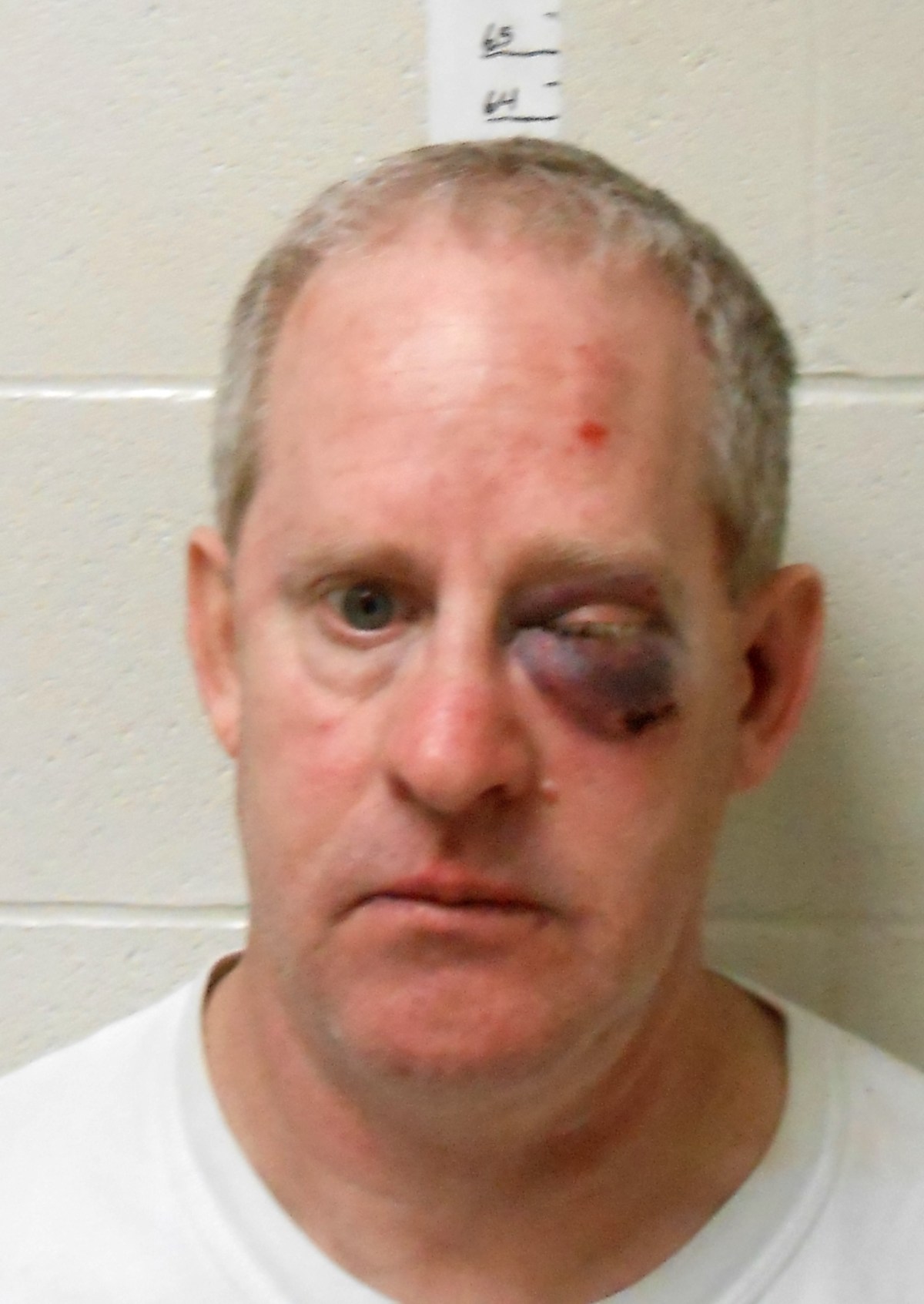
Decker's attorney moves to suppress sexual abuse interrogation confession

The attorney for a Dickinson man facing life in prison for allegedly sexually abusing a 6-year-old female relative asked a judge to suppress state’s evidence of a police interrogation video that shows his client confessing to the crime.

Gregory Paul Decker, 53, who is facing charges of continuous sexual abuse of a child, a Class AA felony, took the stand Tuesday before Southwest District Judge Dann Greenwood after watching his 30-minute interogation video from Jan. 1.

The video shows Decker admitting to the allegations without prompting and within minutes of being interviewed by Dickinson Police Cpl. Brandon Stockie. According to court documents, Decker allegedly touched the girl on her private areas “five or six” times during 2015.

Tuesday’s hearing represented one of two cases against Decker for continuous sexual abuse of a child. The other alleges that in 1997 and 1998, he engaged in approximately 10 sexual acts within another female relative who, at the time, was between 6 and 7 years old.

Decker was arrested the morning of Jan. 1, his birthday, just hours after Dickinson police were called to his home after reports of a fight.

Following an evening with family and friends to celebrate he and his wife’s birthdays, Decker was confronted about the alleged abuse and then punched in the face by a man, who has not been identified by the court other than being a family acquaintance. Decker was taken to CHI St. Joseph’s Health sometime after 12:30 a.m., received stitches around his eye and was then released to police, who took him to the Public Safety Center for questioning about the incident.

Decker’s attorney, Michael Hoffman, alleges in the motion to suppress that Decker did not understand that Stockie, the lead detective on the case, had read him his Miranda rights because he was in pain after being assaulted, was confused and had high anxiety, and knew he was being being called a child molester by family and friends. Hoffman also alleges Decker didn’t know why the detective was questioning him, and said the detective “stated he was there to get (Decker) help for (his) problem or addiction.”

Within about three minutes of being questioned by Stockie, and before the detective brought up the alleged sexual abuse, Decker asked him, “What do you want me to say, that I was molesting her?”

“Well is that what happened?” Stockie asked.

“Well, yeah,” Decker replied.

Decker and the girl’s mother were both questioned by Stockie, which led to Decker’s eventual arrest. After Decker admitted to sexually abusing the girl, he told Stockie he wanted to get help and said he had been sexually abused as a young child.

Decker told Stockie he feared that he would lose his wife and family, and that his home would be terrorized.

Hoffman argued that Stockie purposefully led Decker to believe he’d help him get counseling and didn’t lead him to believe he may be placed under arrest. Stockie said during questioning that he employed a ruse detectives frequently use to try and extract evidence from suspects, and that what he did was a legal interrogation tactic.

Hoffman later brought Decker’s intelligence into question, calling him a “vulnerable person.”

Assistant state’s attorney James Hope argued that because Decker was released by the hospital, he was fully capable of answering Stockie’s questions despite his injuries, and said Decker’s history shows no reason to believe he has any mental vulnerabilities.

Decker is being held at the Southwest Multi County Correction Center. He will have a pretrial conference June 14, and a jury trial is scheduled to begin July 6. He faces the maximum sentence of life in prison without the possibility of parole. A pretrial conference for his other sexual abuse charge is scheduled for July 19.

Burglar who shot himself in head after standoff gets probation

The Reeder man who shot himself in the head after a standoff with Dickinson police last December was sentenced to three years of supervised probation Monday during an arraignment at the Stark County Courthouse.

Jeremy Mellmer, 32, had a five-year prison sentenced suspended by Southwest District Court Judge William Herauf after the judge agreed to the Stark County state attorney’s deal to keep the severely injured Mellmer out of the corrections system.

“He shot himself in the head and left himself in considerable poor health, which will greatly impact his life going forward as well as the reality of any extended incarceration,” said James Hope, Stark County assistant state’s attorney.

Mellmer pled guilty Monday to theft of property and burglary charges, both Class C felonies, after breaking into the home of Dickinson resident Bernard Deichert and stealing approximately $3,000 worth of firearms and other items on Nov. 24.

Mellmer, who wore a large neck brace and an eyepatch over his right eye, spoke in a gravely voice and mustered only one-word answers when responding to the judge’s questions.

Herauf said he was concerned about the proposed sentence, but agreed to keep Mellmer’s health burden out of the state’s hands.

“I’m going to go along with what’s been worked out, otherwise the state is faced with the problems that your health creates,” he said, before speaking directly to Mellmer about his future. “We’re not having this conduct again. None of it whatsoever.”

Joseph Mrstik, Mellmer’s court-appointed attorney, spoke on Mellmer’s behalf before Herauf agreed to the sentence.

“Through his own actions, Mr. Mellmer has significantly limited the ability to live his life and, frankly, if it weren’t for his father, he’d probably be out on the street and not doing very well,” Mrstik said. “My point is, he’s basically just taking it one day at a time, trying to make up for lost time and appreciating the fact that he’s still here.”

Mellmer escaped police during a traffic stop on Nov. 30. Police searched for him until Dec. 2, when they surrounded a house on the 900 block of Ninth Street East. The standoff ended when Mellmer shot himself. He has not been charged for that incident.

However, Mellmer is not done with court appearances.

He will have pretrial conference July 5 on charges of possession of marijuana with intent to deliver, a Class B felony, and possession of methamphetamine paraphernalia and carrying concealed firearm or weapon, both Class A misdemeanors. A July 20 trial is scheduled.

Hope said the state has few concerns about Mellmer committing further crimes following his final sentencing, solely because of his health.

“We’ll monitor his health condition and see how his recovery goes, and whether the health condition he has now is permanent,” Hope said in an interview.

Whiting CEO: We believe in the Bakken

Volker says oil companies still profiting despite lower oil prices

BISMARCK — The chief executive of North Dakota’s largest oil producer said Wednesday that his company is still making big money on Bakken and Three Forks wells despite the industry’s economic downturn.

Whiting Petroleum Corp. President and CEO Jim Volker said during the second day of the Williston Basin Petroleum Conference that he foresees a gradual upturn for the state’s oil industry as crude prices steadily creep upward and more drilled but uncompleted wells are slowly brought into production.

“We’re a big believer in the Bakken, not only its future but even where we are today,” Volker said. “This is why we believe so much in the Bakken. We put our money where our mouth is here.”

Volker pointed to technological improvements for allowing production companies to operate with fewer rigs, allowing them to continue investing in the North Dakota Oil Patch — even if it’s not at the same rapid pace as years prior.

Volker said even at Wednesday’s price of about $50 a barrel — a comment that drew applause from the crowd — a Whiting well is still projected to produce a future net revenue of $27 million at a cost of about $7 million.

Whiting produced more than 4.1 million barrels of crude from nearly 1,500 active North Dakota wells in January 2016. In Stark County, the company had 131 wells that produced around 180,000 barrels.

“This is all happening with improvements in technology and improvements in the way we drill and complete,” Volker said. “Not only are we cleaner, we’re more efficient and we’re doing it for less money.”

Don Hrap, president of the Lower 48 states for ConocoPhillips, echoed that in his keynote address later in the day, as he said innovation and entrepreneurialism created out of necessity by the 2015-16 oil price downturn will make the industry “smarter, better and more efficient.”

“I think that technology innovation is what brought us this renaissance and also it’s what’s going to support us as we move forward,” Hrap said.

Hrap showed charts detailing the ups and downs of oil over the past 150 years, and said while this recent price drop is one of the most sustained in history, it could lead to more level and sustainable long-term prices.

“As we adapt and adjust, we have a tendency to provide the supply that’s needed that kind of moves us to a lower price,” he said. “That’s important to us, because it says we can’t count on $100 oil. We need an industry that’s supportive of a price that’s more moderate.”

Volker, meanwhile, wrapped up his speech with a summary of how Whiting recently paid down $500 million in debt.

Paul Steffes, CEO of Steffes Corp., a Dickinson manufacturing firm heavily invested in the production side of the oil business, said hearing that “certainly makes me feel good.”

“They’re a major player in the Bakken, so it’s an important piece for North Dakota to see Whiting be healthy,” Steffes said.

Lynn Helms, director of the state Department of Mineral Resources, said Volker’s optimism about pushing forward with a slow ramp-up is “consistent with what all the other operators are saying.”

Volker pointed out Whiting’s obligation to continue drilling wells, especially those on federal and tribal land, or risk losing their leases. Helms said those comments prove that rigs will continue to operate in the state, even if there’s only around 30. North Dakota had 28 drilling rigs as of Tuesday.

“I think that’s going to help the state to stay in this 30-rig paradigm that we’re in, because those drilling obligations are really expensive to walk away from,” Helms said.

Cattlemen talk market volatility

Larry Schnell, owner of Stockmen’s Livestock Exchange in Dickinson, drew applause from his industry colleagues Friday when he said cattlemen are angered when traders use subtle deviations in the cattle markets and cause major price fluctuations that trickle down all the way to their operations.

“That’s why it’s so hard for us to accept that we should face the consequences of all the trading that takes place under the table, in the dark,” Schnell said. “That’s hard for us to accept. … These people here, they’re not a part of that. They only suffer the consequences of that trade.”

Many from the western North Dakota and South Dakota cattle industries gathered Friday morning at Stockmen’s to listen to Schnell and other industry leaders speak out on problems they see in the cattle markets at a forum hosted by U.S. Sen. Heidi Heitkamp, D-N.D.

Heitkamp, Schnell and five other panelists sat in the Stockmen’s sales ring — where cattle are typically showed for auction — as they discussed market concerns for more than two hours. Other panelists included Bowman rancher Steve Brooks, who is president of the North Dakota Stockmen’s Association; Justin Lumpkin, a U.S. Department of Agriculture marketing officer; Larry Kinev, president of the Independent Beef Association of North Dakota, and cattle buyer Fred Berger, of Mandan.

“What we were talking about here today isn’t, I think, about the high prices or the low prices,” Schnell said after the forum. “It’s about the volatility. It’s about the volatility where the market changes for what seems like no reason whatsoever.”

The managing director of commodity research for the CME Group, which operates the Chicago Mercantile Exchange, said the exchange is months away from fixing issues that cause excess volatility in cattle markets. David Lehman told cattlemen that the exchange, in the next couple of months, will implement market circuit breakers on live and feeder cattle to install limits on how cattle contracts are traded.

He said it should help ensure market integrity. The circuit breakers are intended to keep prices from skyrocketing or bottoming out based on volatile activity in the market regardless of the speed or way people are trading.

“Rather than a hard limit that stops the market, it halts the market,” Lehman said, adding it will trigger if live cattle prices move more than $1.50 during an hour, or $2.25 for feeder cattle.

Ron Volk, a rancher from the Sentinel Butte area, said he understands the reasoning for implementing the circuit breakers but told Lehman he doesn’t believe it’ll be a permanent fix for the market’s instability.

“It seems to me like we’ve got a broken leg and you’re trying to throw a couple Band-Aids on it,” Volk said. “I don’t see it changing anything. It’s prolonging the broken leg. Now instead of putting a cast on, you may have to cut the leg off.”

Lehman said he agreed that “the leg is broken,” but said circuit breakers already help deter volatility in many markets, including oil and precious metals.

He said the circuit breakers are being put in place to limit moments like one that happened last week when 175 feeder cattle contracts — nearly three times the average daily trades made — were traded on the Chicago Mercantile Exchange and caused cattle prices to drop significantly.

“That set off a cascade pushing the market down until it found the other bids or offers that could match this 175-lot order,” Lehman said.

The problem, the panel said, is the volume of electronic trading happening by hedge funds or others who normally wouldn’t trade cattle futures, but do so based solely on market deviations.

Schnell believes it’s “nerds writing programs who are looking for an advantage.”

“What some of those algorithms trade on is only the knowledge of the trade, not knowledge of information,” Schnell said. “To us, that’s insider trading.”

Mike Heaton, a McKenzie rancher and member of the Independent Beef Association of North Dakota, said those outside of the cattle and agriculture industries trading live and feeder cattle and causing volatile prices swings in the markets, are comparable to parasites.

“There’s a whole other world out there of people living off of our industry,” he said. “When we get no return on it, they’re like the parasite that I get rid of in my cattle.”

Heitkamp said the Senate Agriculture Committee — of which both she and Sen. John Hoeven, R-N.D., are members — is holding a hearing about the volatility in cattle markets Thursday in Washington. She said part of the reason for hosting Friday’s forum was so she could get an idea of what North Dakota cattlemen believe are the biggest issues.

“The more this marketplace does not work for the people in this room, the more difficult it’s going to be to manage it,” Heitkamp said. “The more people who pull out, the more irrelevant it is.”

Herman Schumacher, a cattleman from Herreid, S.D., challenged Lehman on the constant cattle market fluctuations and said he believes the issue comes back to hedge funds and the meat packing industry trying to build a greater stake in the market.

“We’re fighting to try and not chicken-ize the cattle industry,” Schumacher said, referring to the influence large corporations have on the poultry trade.

Schumacher said he thought the input cattlemen from the area had at the meeting was beneficial as Heitkamp and others take their issues back to Washington next week.

“The only thing that keeps us separate from them (the commercial meat packing industry) are these cowboys that you had sitting there,” Schumacher said, pointing to chairs behind him.

Missing the ‘life of the party’: Dickinson businessman DJ Charbonneau remembered after cancer claims his life at 42

The happy hour crowd at Liquid Assets bar in Dickinson had a solemn tone for a few moments on Wednesday evening before giving way to laughter, backslapping and storytelling.

The atmosphere was just the way DJ Charbonneau would have liked it.

Charbonneau, the Dickinson businessman who co-owned both Charbonneau Car Center and Liquid Assets, died Wednesday morning at just 42 years old following a 15-month battle with cancer.

“There’ll never be another one like him,” said Brent Haugland, one of Charbonneau’s oldest friends.

Charbonneau, one of Dickinson’s most energetic and bombastic personalities, was diagnosed with appendix cancer in January 2015.

The extremely rare form of cancer initially affected Charbonneau’s appendix before spreading to his liver, colon and peritoneum — the thin layer of tissue covering abdominal organs and the abdominal cavity. Eventually, it reached his lungs and bones, his wife, Michelle, said on Wednesday.

“He was a fighter,” she said. “He was trying to beat it. He did everything he could. Everything. He kept saying, ‘I’m going to beat this.’”

In his final months, Michelle and many of DJ’s friends said he rarely revealed that his health was failing.

“As close as I was with him, he never really let on how he was feeling,” said Jason Fridrich, who co-owned Liquid Assets with Charbonneau. “… He never complained about it. You’d never know. He’d always still have a big smile on his face and we’d chat just like old times.”

Fridrich said one of his best memories happened last November when Charbonneau surprised him at his wedding in Arizona.

“He told me he wasn’t going to be able to make it,” Fridrich said, his voice breaking. “He ended up showing up in Arizona. He had a blast that night. It was so fun.”

Michelle laughed and said DJ was often the “life of the party,” even playing off his cancer for jokes.

She said he’d always tell her “Fireball kills cancer,” referring to the popular cinnamon-flavored  whiskey and DJ’s drink of choice.

“When he went to Houston, they told him he couldn’t drink anymore,” she said. “And when things got worse, he said, ‘See, I told you, Fireball fights cancer.’”


Community leader

DJ and Terry Dvorak bought Charbonneau Car Center from DJ’s father, Don Charbonneau, in 2009. Dvorak said Friday that the dealership will remain in the Charbonneau family name “as long as I’m affiliated with it.”

“Don trusted (DJ) and I to carry on the legacy,” Dvorak said.

He said the dealership had seen “a lot of sadness” it the past few days, including from customers who he said would often come in just to see DJ and chat.

“He’s going to be missed,” Dvorak said.

That was made obvious online throughout the week as hundreds of condolence messages were posted to DJ’s Caring Bridge website, and throughout Dickinson’s Facebook community.

Fridrich’s post, “Heaven just became a better place. I am gonna miss you my friend,” was shared by more than 150 people.

“He was just loved by so many,” Michelle said. “The outpouring of people, it’s just crazy. Everybody just loved him. He loved life. He loved to enjoy life.”

DJ was heavily involved in the Dickinson community outside of his businesses.

He was a past exalted rule of the Dickinson Elks Lodge No. 1137 and remained president of the St. Joseph’s Hospital Foundation Board throughout his battle with cancer.

His legacy of giving back to his community will carry on through the Team DJ Memorial Fund, which is being set up to help cancer patients and families in the community.


Lasting memories

Friends and family said DJ lived life to the fullest in his final months.

He took several trips, including a family honeymoon trip to the Dominican Republic a year ago — which was initially supposed to be he and Michelle’s wedding trip. While doctoring in Houston in April, he was even able to watch the North Carolina Tar Heels — his favorite team — play in the NCAA men’s basketball national championship game.

“He always kept saying, ‘I’m going to keep fighting until there was no fight left,’” Fridrich recalled. “He knew he had the odds stacked against him, but he was stubborn. Until the last day, he said, I’m not going to quit.”

That stubborn streak was balanced out by DJ’s willingness to help others, his friends and family said.

Matty Lyons, who for several years was the manager of Liquid Assets, said he’ll never forget how DJ “took a chance” on him.

“He believed in you before you believed in yourself,” Lyons said Wednesday.

Lyons, sitting at the bar, pointed behind it and laughed about the time DJ — who Lyons said rarely meddled with the bar’s staff — jumped behind the bar to help on a night when a Liquid Assets customer bought more than 200 shots.

“It’s little things like that you don’t forget,” he said.

Haugland, who said he became better friends with DJ after they both moved back to Dickinson following college, sat next to the bar at Liquid Assets on Wednesday surrounded by friends and colleagues, all remembering DJ’s life.

Just a few feet away, the usual spot at the far end of the bar where DJ often perched sat empty.

Haugland looked ahead quietly and did his best to hold his feelings together.

“He’s one of those people who could always make you laugh, no matter what,” he said. “Always there to cheer you up when you needed him. Always there to laugh and joke. I had a lot of fun times with him. I’ll never forget him.”

DJ Charbonneau’s funeral is at noon Monday at Stevenson Funeral Home with a prayer service at 4 p.m. Sunday. Visitation at the funeral home will be held from 1-7 p.m. Sunday and from 9 a.m to noon Monday.