Quality-of-life factors determine if people choose to live in Dickinson

James Kramer told a group of Dickinson city leaders Tuesday that “individual factors” such as recreation, tourism, arts and culture are becoming the main influences in where people choose to live their lives.

The city’s Parks and Recreation director said he sees it almost daily when business leaders and Dickinson State University recruiters bring potential employees and students, respectively, to the West River Community Center in an effort to convince them to work, learn and live in Dickinson.

“In olden days, people moved to a place where there are job opportunities,” he said. “Nowadays, people may have two or three different employment opportunities, and they’re going to go look at those and base their decision on different individual factors. Does that community have what I’m looking for to live?”

Kramer’s comments kicked off the Quality of Life luncheon hosted by the Dickinson Area Chamber of Commerce at Lady J’s.

The luncheon featured short presentations on areas the influence Dickinson’s well-being by Terri Thiel, executive director of the Dickinson Convention and Visitor’s Bureau; Jim Kelly, interim CEO of the Theodore Roosevelt Presidential Library Foundation, and Ty Orton, executive director of the DSU Heritage Foundation.

Kramer said the parks department is turning its focus to improving long-neglected areas of its portfolio, such as the city’s trail system as well as possible improvements around the Patterson Lake Recreation Area.

He said trails are “an area where we’re lacking.”

“We definitely need to take a look at our trail system and expand it,” Kramer said. “We have begun working with the city to create a master plan and create some new opportunities in that area. We look forward to doing that in the future.”

He said opportunities exist for expansion of recreational opportunities near Patterson Lake, and pointed to the two-mile Crooked Crane Trail project that will be completed this summer as an example of that.

Like Kramer, Kelly also gave a taste of quality-of-life improvements that could be in Dickinson’s future.

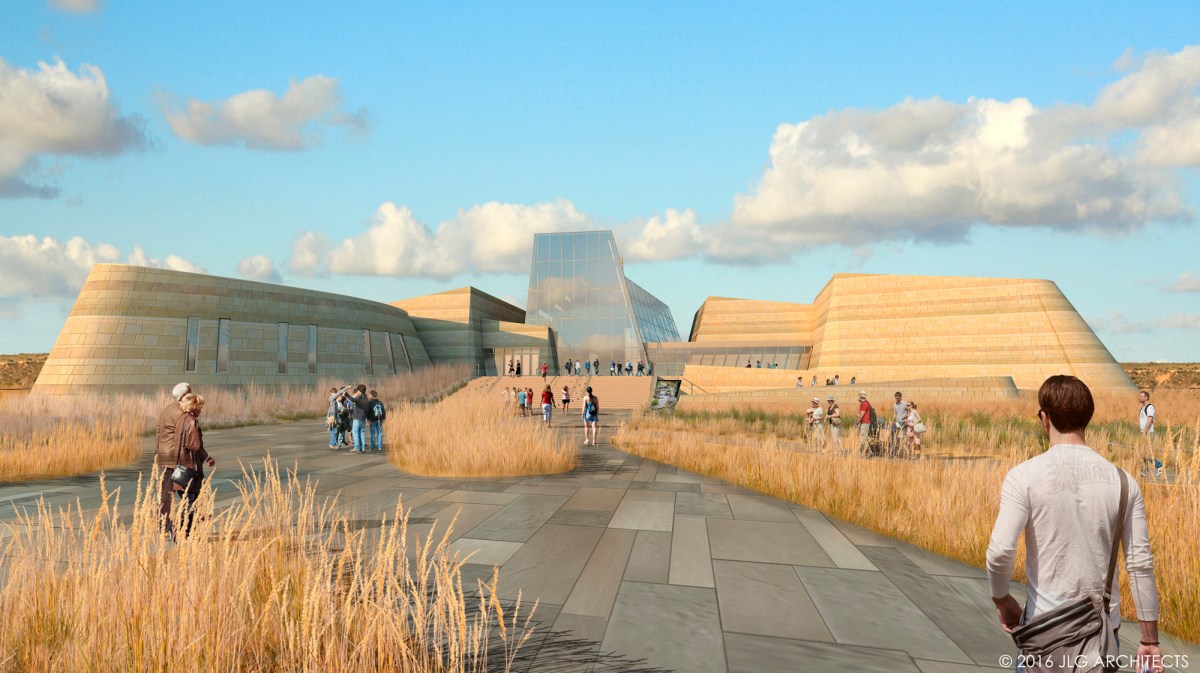
Kelly spoke about the Theodore Roosevelt Presidential Library project on DSU’s campus and showed renderings of what the library would look like when completed. The project is likely to begin construction on the DSU rodeo grounds near the corner of State Avenue and Fairway Street this summer.

The first project, a replica of Roosevelt’s Elkhorn Ranch cabin made out of cottonwood trees found in the Badlands, could begin construction this summer after the final Roughrider Days Rodeo held in June.

The library — which renderings showed would be a large, sweeping structure complete with an all-glass great hall — would be years in the making and Kelly said would require “significant site preparation” as plans require vast landscaping improvements to the 26-acre site.

“As you go by the site now, it’s sort of flat as a pancake and as flat as the top or your table,” he said. “That’ll change significantly as we get into the building of the facility.”

If the library comes to fruition as planned, Thiel said Dickinson has more than enough hotels to give visitors a place to stay. She said the city has 1,773 rooms available at 21 lodging properties — a 135 percent increase from 2004.

However, the city’s hotel occupancy rate dropped 32.5 percent from 2014 to 2015 because of the decrease in the area’s oil activity. With that in mind, Thiel said the CVB’s advertising push in print, online and social media has been to promote Dickinson’s hotel availability.

“We really try to educate people in the state about that,” she said.

Orton, who closed the speeches by talking about the progress the new Heritage Foundation is making, said part of maintaining Dickinson’s quality of life is for the university to find and retain students who want to stay in the city after they graduate.

“We have students there right now that have stayed through some very hard times,” Orton said. “They stayed because of their true love of DSU and this city. They chose to stay in Dickinson because of their love for the community, because of the quality of life. Those are the people we need to make sure they can stay around, they can continue to build this community 20, 30, 40 years from now.”
DSU shuttering Strom Center: Grant funding struggles, foundation dissolution led to entrepreneurship center’s closure

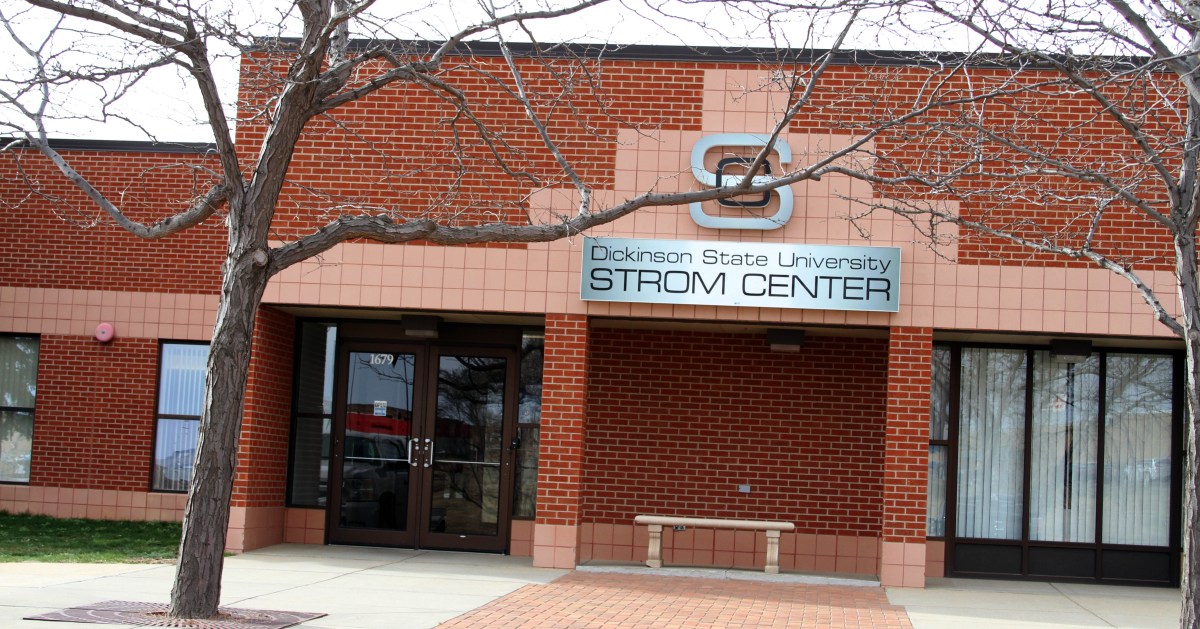
Ray Ann Kilen said she cried as Dickinson State University President Tom Mitzel told her the university would be closing the school’s Strom Center for Entrepreneurship and Innovation.

Still, the Strom Center director said she understood the “business decision” the university was forced to make.

“At the end of the day, you have to take care of the core business, which is the university,” Kilen said. “I commend him (Mitzel) and I don’t have any criticism of his decision based on the business decision that says we have to take care of the university first.”

The Strom Center, which opened in 2007 in DSU’s off-campus building in north Dickinson, will close April 11. It has four full-time employees, including Kilen, a part-time administrative worker and two student interns.

The Strom Center is financed through a mixture of state, federal and private grants, and is not accounted for in DSU’s operating budget — which was recently slashed $1 million because of state-mandated 4.05 percent across-the-board cuts.

“It’s a difficult economic time,” Mitzel said. “Grants aren’t easy to pursue. They haven’t been able to uphold that end of the business.”

Kilen said the Strom Center was also no longer receiving endowment funds that had been channeled to it through the old DSU Foundation, which is in financial receivership.

“Had we not lost our support through the foundation, we wouldn’t be having this conversation,” Kilen said in an interview.

Kilen and Mitzel said while grant money was slowly trickling in, it wasn’t coming fast enough to sustain the Strom Center’s operation.

“We knew that we were upside down financially,” Kilen said. “There’s no doubt about that.”

The Strom Center was started through donations by DSU alumni Jerome and Rosie Strom and local businesses. Its goal was to help revitalize the southwest North Dakota economy by encouraging entrepreneurs.

Kilen said she estimates that since it opened, the Strom Center has impacted about 1,500 businesses and helped 200 small businesses get started. She also estimates the center has helped small businesses access a combined $100 million in lending capital.

The Strom Center also houses the regional office of the Small Business Development Center, TechWest, as well as other state-based business programs.

Mitzel said DSU will work to transition services the Strom Center provides to departments on DSU’s campus.

“We’ll be reaching out to all the main entities and the services it has been providing to keep them going,” Mitzel said.

Kilen said she’s still committed to DSU and the Strom Center’s initial mission, and hopes to help assure its work isn’t undone because of its closure.

“My commitment has always been to the people we serve,” she said. “I love what I do and I feel very passionate about the industry I work in and the clients we’ve supported. My next step would be to talk to partners to understand where those new relationships can be built so the people we serve can continue having services.”


A man who lived to help: Family, friends reflect on life of Dickinson volunteer firefighter Hammond who died in avalanche

The Hammond family sat at a table, both laughing out loud and quietly shedding tears as they reflected on the life of Levi Hammond.

“He just wanted to help,” said Levi’s sister, Karla, as her eyes welled with tears.

Levi Hammond
Levi Hammond

Her five words brought the room to a brief silence, as it almost perfectly summed up Levi’s short, yet accomplished life.

Levi, a married father of three young children and volunteer firefighter whose family said he put the Lord above all else, died Saturday morning at 36 during an avalanche while he was snowmobiling with friends in the Bighorn Mountains near Sheridan, Wyo.

Levi’s family said he lived life by going all out, whether he was fighting fires, studying the Gospel, selling farm equipment for Butler Machinery, or simply buying his wife, Becky, the best contact solution he could find.

“He didn’t have any concern for himself,” Becky Hammond said. “His concern truly was for others around him.”


Called to help

Levi’s tragic death isn’t just hitting his family hard. It has shocked fire departments in Dickinson, Beach and Golva, as well as the staff at Butler.

Dickinson Fire Chief Bob Sivak said it’s hard to think that someone who was as passionate about life as Levi is now gone.

“In a very real sense, we’ve lost a member of a family,” Sivak said. “This isn’t just a group of people that comes together now and then. There’s a real attachment in a fire service. His loss is truly felt and has truly hurt us.”

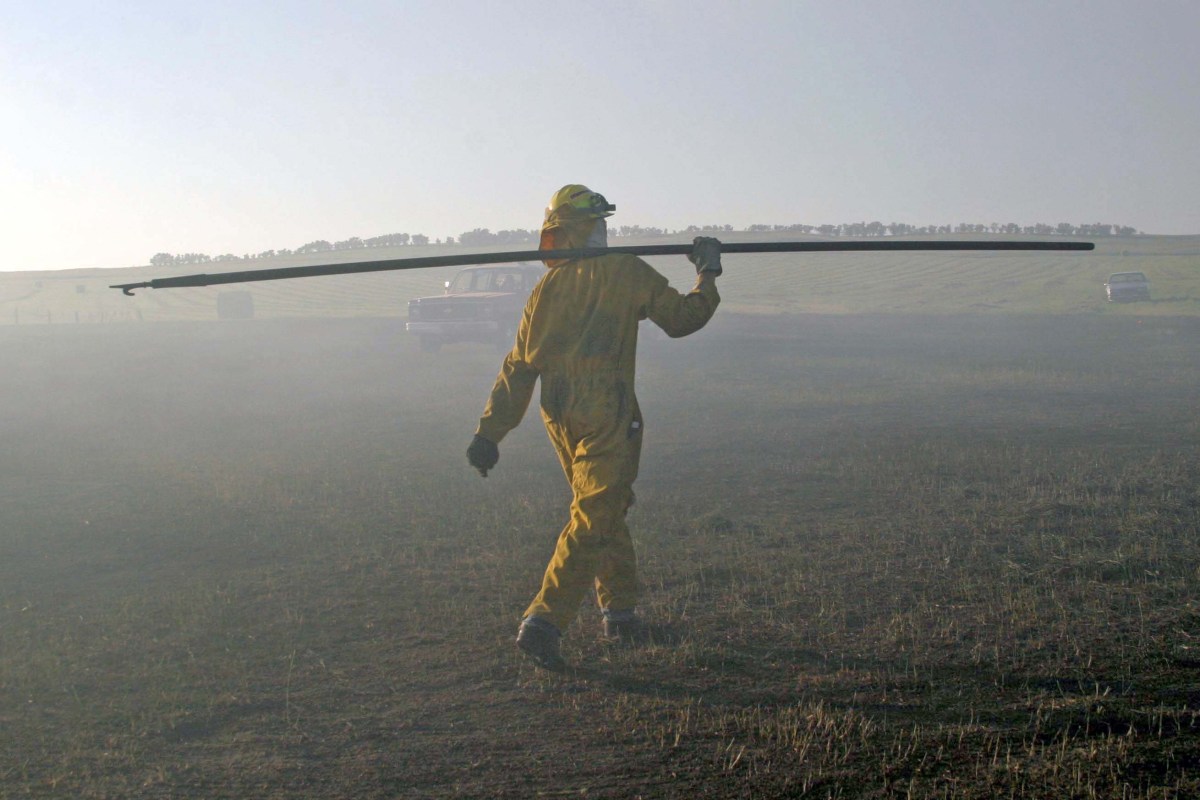
Levi spent two summers after high school as a firefighter for the U.S. Forest Service in Miles City, Mont., and continued as a volunteer member of his hometown Beach and Golva fire departments.

He became a state board-certified firefighter last May and Becky said he toyed with the idea of taking a full-time position with the Dickinson Fire Department when new openings were created. Sivak said he and Levi had a good talk about what doing that would mean.

“He prayed about it,” Becky said. “It was a definite no. He did say, ‘Becky, I know that I’m called to be a firefighter. I know that this is what I’m supposed to do.’”

Sivak recalled times after the department had wrapped up fighting a fire and Levi would be standing there sweaty and dirty with a smile on his face. Friends and family said it was nearly comical to see how invigorated Levi was the morning after a late-night call, even if it meant he didn’t get any sleep.

“He loved to help people,” said Ed Hammond, Levi’s father. “He just had a passion for it. He loved to be there. I suppose a lot of it was the adrenaline rush.”


Selfless role model

Tom Irwin, a Dickinson volunteer firefighter who is married to the Hammonds’ cousin, described Levi not only as a selfless role model, but a man who celebrated the achievements of his firefighting brothers.

After the downtown Dickinson fire last summer, where a woman and her child were rescued from their second-floor apartment by firefighters, Irwin said Levi carried enough pride for the whole department.

“Levi wasn’t even the guy who made that rescue, but he was on cloud nine for a couple weeks because one of his brothers had saved somebody,” Irwin said. “That’s the excitement he always carried. He always had a smile on his face.”

When Levi was working at his regular job, both Irwin and Kyle Johnson, manager at Butler Machinery, spoke of Levi as a man who often went overboard — usually at his own expense — to make sure his customers got what they needed.

“He’s just one of those type of employees who’s hard to replace, because he did a very good job at what he did,” Johnson said. “All you had to do was pick up the phone and call Levi, and he’d do what he could to help you out, whether you were a fellow employee or customer. He was there when you needed him.”


Chosen path

Ben Zachmann, Levi’s cousin and best friend, was with him the morning of his death and said Levi was excited about the opportunity to ride through the mountains that day.

While out on the trail, Zachmann recalled Levi saying, “I’m content and I could go home now.”

Later in the ride, the group came to a pair of paths. Levi took one path, while Zachmann and his wife and the rest of their party went in different directions. After a few minutes went by without seeing Levi, the Zachmanns went looking for him.

Using their emergency beacons, they found Levi buried by a snowslide.

Zachmann said he and his wife, a nurse, did everything they could to save Levi. But it was too late.

“They did so much,” said Cheryl Hammond, Levi’s mother. “They did more than anyone else would ever do.”


Godly father

While snowmobiling was his hobby and firefighting was his call, Zachmann said nothing mattered more to Levi than his children.

He leaves behind 6-year-old Gage, 4-year-old Bodey and 1-year-old Rawley.

“It was serving as father, being a husband and a Godly father to his kids that meant more to him than any hobby he had,” Zachmann said.

Becky paused and laughed as she described how Levi would play with his kids, or roll around with them on the floor regardless of who was watching.

“He didn’t care if he made himself look like a fool, if it was to have fun,” she said with a smile.

As the Hammond family prepares to say their final goodbyes, they say they’ll always remember how Levi kept faith and God close to his heart — even going as far away as Oklahoma to attend Bible college after graduating from Williston State College.

“Part of what’s giving us so much peace is knowing where he’s at right now,” said Josh Hammond, Levi’s brother. “He’s such a man of God.”

JE Dunn building the state

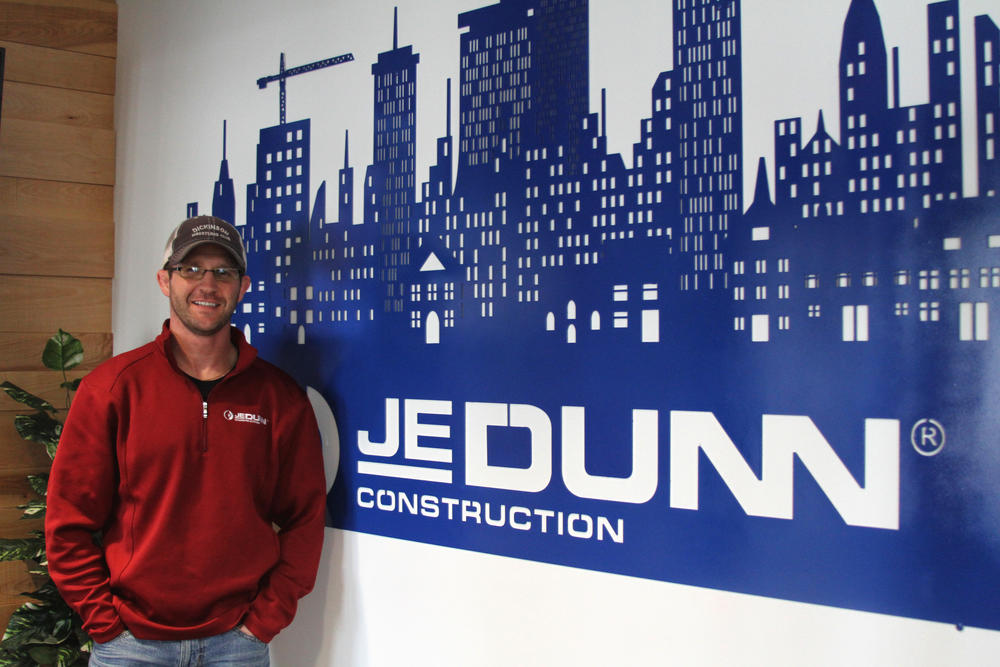
With the oil boom in full swing, Marc Mellmer saw the possibilities for growth and looming building projects in western North Dakota, and he wanted JE Dunn Construction to be a part of it.

Nearly three years and more than 20 building projects later, the 31-year-old construction operations coordinator sits in his sensible, windowless office in one of the city’s newest buildings — one his firm had no hand in building, he notes with a laugh — and said despite the economic downturn in North Dakota set off by plunging oil prices, business is still looking good.

“I’ve been asked a million times, ‘Why would JE Dunn put an office in Dickinson, N.D.? That just seems crazy. Why would you do that?’” he said with a smile. “But our goal was to touch the entire state, and we’ll continue to touch the entire state and create relationships.”

This year, JE Dunn will begin or continue work on — among its many projects — the North Dakota governor’s residence and the new Bank of North Dakota Financial Center in Bismarck, Harold Newman Arena in Jamestown, and the Trinity High School reconstruction and expansion, a project near to Mellmer’s heart as he’s a graduate of the Dickinson Catholic school.

Mellmer graduated from Trinity 13 years ago and went on to earn his degree in construction management at the University of Minnesota. He was working for JE Dunn on the Sanford Health Clinic in Detroit Lakes, Minn., when he began pushing for the company to bid on projects in booming Dickinson.

“I requested that we begin to chase projects in western North Dakota, and it was made my primary responsibility to not only pursue the projects I wanted to back home, but also take them from the pre-construction all the way through the completion and warranty phase of projects,” Mellmer said.

So far, Mellmer and his team are doing just what he set out to do.

JE Dunn came to the area in 2011 to build the Mercy Medical Center Birthing Center in Williston, where they’ve had an office since 2012. Not long after that, the company was awarded building contracts for the $70 million Williston Area Recreation Center and the $100 million CHI St. Joseph’s Health campus in Dickinson.

“When we were about halfways through St. Joe’s hospital project, we decided we needed to open an office in Dickinson,” Mellmer said. “What anchored those projects like that were not only the fact that we were building those two big jobs, but also servicing those buildings and staying close to the owners and being committed to the area — to both Williston and Dickinson — after we completed the projects. And then the smaller projects started to spawn off of the two big anchor projects.”

Mellmer said what makes the JE Dunn Dickinson and Williston offices unique within the company is that they chase projects across in the entire state.

“The logistics of the North Dakota offices are different than the logistics of any of our other offices in the country,” he said. “They’re all in metropolitan areas, where you have a certain radius of work that keeps the business afloat. We think of North Dakota as a client. That’s been our motto from day one.”

JE Dunn, which is headquartered in Kansas City, Mo., has 22 offices in cities across the nation. It’s two smallest are Dickinson and Williston. Between the two Oil Patch hubs, the firm has about 20 full-time employees, and Mellmer said at any given time, it can employ 10 to 15 more specialists working in the state for up to two years at a time. Most of its work is done by local subcontractors.

“We thought it was in the best interest of us and our clients to open a physical office and hire local people to work for JE Dunn,” said Mellmer, a Dickinson native. “And also import our people to become local residents of western North Dakota and commit to the area.”

The newest employee is Michael Murphy, a project engineer and recent graduate of North Dakota State University who’s doing pre-construction work on the planned Newman Arena

Murphy, from Fargo, works in the Dickinson office but said he’ll be traveling around the state regularly once the arena project begins. He said he was convinced to join JE Dunn after speaking to the firm’s representatives at a job fair.

“The Dickinson area, at the time, was a very expanding market,” he said. “With the recent oil declines, the construction is still going strong. Being a new hire here, it’s a good opportunity.”

Other employees, like project coordinator Melissa Gjermundson, have been around the area their entire lives. She said working for JE Dunn has been a good fit.

Gjermundson came on board after spending time working for Dickinson’s planning and zoning office, Marathon Oil Co., and as a Dickinson Police Department dispatcher. She met Mellmer while working for the city shortly after its leaders decided to build the Public Safety Center — the new police and fire station that’s now the workplace of her former dispatch co-workers. At JE Dunn, she primarily works with subcontractors.

“I make sure they get their contracts,” she said. “I make sure they’re compliant and I make sure that they get paid.”

Having a strong stable of subcontractors is vital to JE Dunn’s success in western North Dakota, Mellmer said.

When the firm moved first started working in North Dakota, he said the oil boom made it difficult to hire top-quality subcontractors.

“The biggest successes were building the hospitals and the Williston recreation center at the peak of the boom, when contracting was at it’s highest level of difficulty,” Mellmer said. “From then, being able to transition to do smaller projects and more of what I’d call normal-size projects for western North Dakota, we’ve made a really smooth transition to become economic in building those projects and really creating relationships with our owners of these smaller projects, which seem to be difficult for a large corporation.”

Because the firm planted roots during the oil boom, Mellmer said he knows projects will become fewer and farther between with the state in an economic slowdown. He said that just means JE Dunn will have to venture out of western North Dakota more often and seek contracts in cities like Fargo and Grand Forks.

“That’s where we hold our ground and stretch our wings even further, and chase projects down every rabbit hole,” Mellmer said.

He said JE Dunn doesn’t view itself as a construction firm that only chases huge projects, and notes that the slowdown has afforded it the opportunity to do work that means a big deal to some small towns.

He pointed to the projects such as a new classroom and library at the Home on the Range near Sentinel Butte, the Killdeer Aquatics and Wellness Center that’s nearing completion, and the Flasher High School and Gymnasium.

All are small projects compared to JE Dunn’s usual scale, but Mellmer described them as fun and a positive experiences because of the response the firm receives from the small communities.

“We’re not too big or too proud to chase and work in any town, on any project, of any size,” he said.

‘Crossing’ into new territory: Oilfield entrepreneur enters restaurant business with new steakhouse

Seth Murphy knows next to nothing about running a restaurant.

But he knows what he likes: great food, a place he can both bring his family and conduct business, and a venue that can be used to give back to the community.

He wants The Crossing to provide all of that and more when it opens next summer.

The Dickinson oilfield entrepreneur said he isn’t letting the western North Dakota energy industry downturn keep him from diversifying his business ventures.

“Everyone says it’s a hard industry, and I’m sure it is,” Murphy said of the restaurant business. “But hard is a relative term. Not everybody deals with what we deal with by 5 a.m. every morning either.”

Murphy, the president of oilfield service company SM Fencing, said he wanted to start a business separate from the energy industry that would be able to provide an amenity to southwest North Dakota community.

He and his company believe they’ve found that opportunity with The Crossing, an 11,000 square foot steakhouse and bar under construction on north State Avenue near the Sierra Ridge apartment complex.

Kodee Gartner, the management director of Endeavor West — Murphy’s latest business entity that will function as the operations arm for The Crossing — said being a part of the team starting the restaurant has been rewarding in that they’ve been able to start with a blank canvas and move forward independently.

“What is our vision and how are we going to get there?” she said. “There is no blueprint. This is us sketching it out on a kitchen table, and trying to figure out what this is going to look like and how this is going to go. One of our biggest advantages is our team is deep in common sense.”

When complete, The Crossing will have two levels and ability to seat around 270 people.

Beyond that, Gartner said, The Crossing will have two private conference rooms able to provide space for everything from parties to board meetings, and another area she said can be called a “multi-use space.”

“We want The Crossing to be where people celebrate their life’s biggest moments,” Gartner said.

While the group’s main focus is to bring another dining opportunity to the area, it also hopes to use The Crossing as a philanthropic entity.

Gartner, who like Murphy is from the Killdeer area, was brought on board a little over a year ago and she was sold on The Crossing, in part, because of Murphy’s wish to conduct more philanthropic efforts.

“When I started on, what was appealing was he’s looking for a legacy impact,” she said. “… That’s part of the Crossing’s DNA is there will be social good woven into it.”

Gartner said The Crossing wants to be known as a gathering hotspot and the restaurant of choice for locals, both old and new, and be able to cater to changing social demographics.

“It isn’t a goal to build this to service the oilfield if and when it comes back,” Murphy said. “We’re building this to serve the locals that have been here that input good into the community. The agricultural segment is going to be a big part of what we play to.”

Ashley Lamphier, a business development specialist with Endeavor West, came to Dickinson from the Atlanta area through her friendship with Gartner. The two had worked together in the past, and after moving here, Lamphier said she fell in love with the area and her new company’s long-term plans, starting with The Crossing.

“I really see it as becoming almost a cornerstone of the community,” she said. “I think it’s going to be a big place where people can gather.”

As for the food, Murphy said he wants The Crossing to be as meat and potatoes as it gets, catering first to southwest North Dakotans and staying away from “fancier” entrees. A “simple menu” is planned.

They hope to have a general manager hired this week. That person will be charged with hiring around 30 employees, and running the day-to-day operations of The Crossing.

Murphy said he hopes to hire a manager he can trust to implement a strong work ethic while also being unafraid to try new things.

“None of us have restaurant experience,” Murphy said. “We know what we like. We purposefully didn’t bring anyone into the team that had restaurant experience because the way you’ve always done it is not always the right way. Just because it’s been done one way for 30 years doesn’t mean it can’t be done better.”