Western North Dakota energy service leaders, legislators optimistic after oil conference

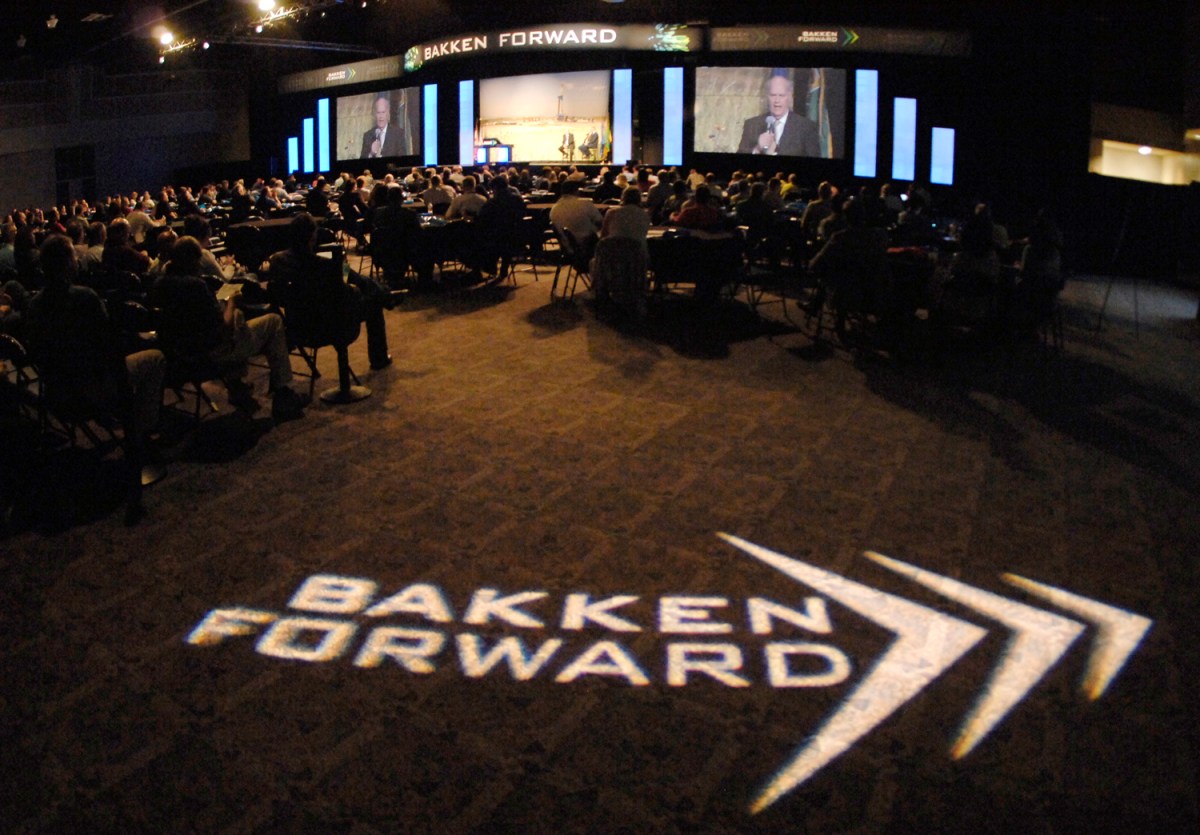
BISMARCK — As the price of oil hovered around $50 a barrel last week, many western North Dakota oilfield and energy service companies turned to the Williston Basin Petroleum Conference to try to get a feel for where their industry is headed.

Most said they now feel better about the future of their businesses, as do state legislative leaders.

“What stood out to me was really the positivity,” said Matthew R. Kostelecky, president of B. J. Kadrmas, a Dickinson oilfield service company. “I really thought we’d be coming here with a lot of doom and gloom, obviously. But after listening to a lot of these CEOs and important people in business, it really just seems like this is the time to be efficient, smart, creative, kind of weather the storm, and it’s all going to come back.”

The past two years have been the 37-year-old Kostelecky’s first oil price downturn. He took over the business midway through the boom, only to watch work slow after a couple years. He paid close attention to what Whiting CEO Jim Volker and ConocoPhillips Lower 48 President Don Hrap said when they spoke at the conference.

“The attitude is that ultimately there’s a positive outlook for the future, but I think this is a new normal,” Kostelecky said. “For my generation, this is the first time that we’ve seen this. So it’s new to us, but the industry veterans, they’ve been there, they’ve done that. It’s just like anything else. You have to get past these difficult times.”

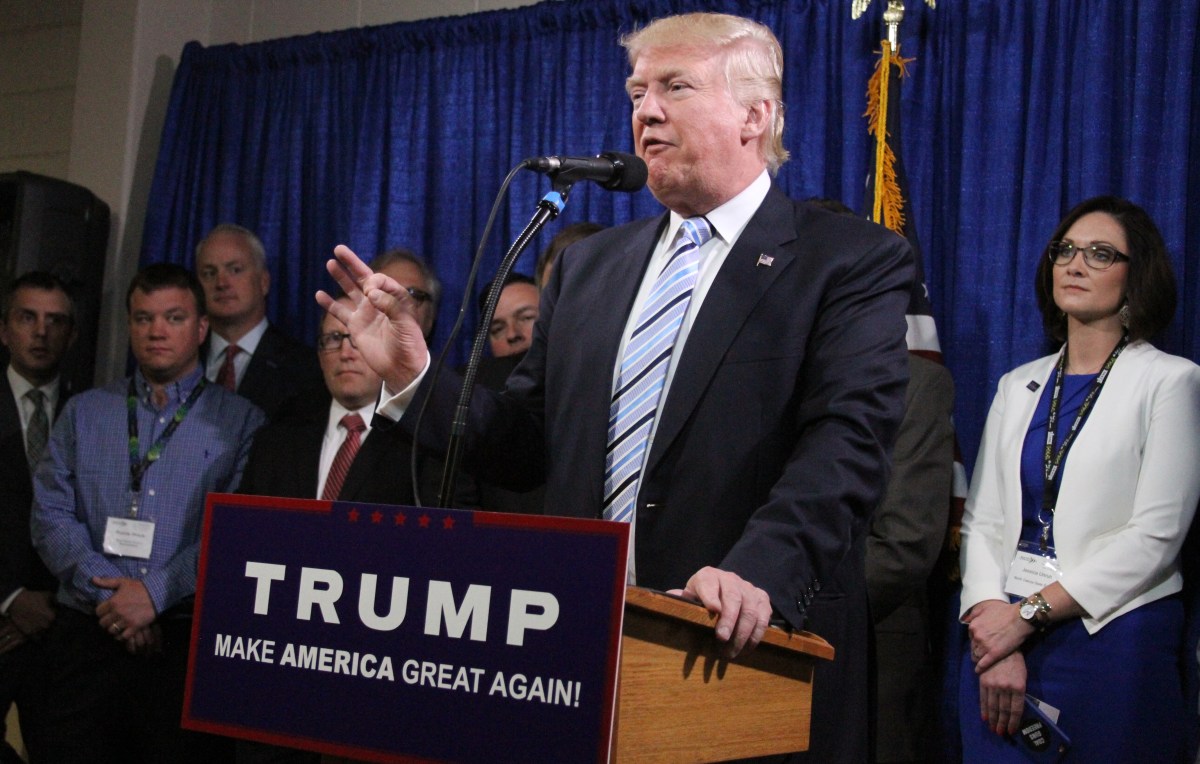
State Sen. Kelly Armstrong, R-Dickinson, said he felt conference attendees left invigorated by Thursday speeches from Republican presidential candidate Donald Trump and former college football coach Lou Holtz.

He said Trump’s energy platform resonated with the industry folks in the building, and tied into themes he heard throughout the week.

“We need consistent, reasonable regulation that protects the environment while allowing people to do business,” said Armstrong, the NDGOP chairman and son of Dickinson oilman Mike Armstrong. “All they want is tax certainty and regulatory certainty. That’s what they want. Especially for some of these tertiary things for the oil industry.”

Along with an industry push for better regulations, innovation at the wellhead and the future of value-added petroleum byproducts and industries were focused on throughout the week.

North Dakota Senate Majority Leader Rich Wardner, a Dickinson Republican, sat through multiple sessions, listening to everything from the future of natural gas liquids to industry price predictions. He said he feels that while recovery may time some time, “things are looking up for the industry.”

“I heard this: $65 oil is the new $100 oil because they’ve now got so many efficiencies,” Wardner said. “Technology is moving forward in allowing the industry to get more oil out of the rock.”

Paul Steffes, CEO of Dickinson-based Steffes Corp., said many industry leaders anticipate gradual uptick in work. Hearing that, he’s a more enthusiastic about business prospects.

Steffes Corp. manufactures equipment used at the wellhead during the extraction process, most notably its engineered flare systems that have decreased the amount of natural gas flared throughout the Bakken.

Steffes said he spoke with several people who said their companies will need more equipment to support their drilled but uncompleted wells (DUCs) once they’re put into production.

“It certainly has a possibility that we could be spiked and be much busier than we have ever planned we were going to be, as soon as they finish these DUCs,” he said. “It is possible that we’ll be busier than we’ve ever been. That is kind of a scary thing.”

KC Homiston, the co-owner and president of Highlands Engineering in Dickinson, said he’s accepted the oil industry’s “new normal.”

The oilfield aspects of Highlands’ business have declined during the slowdown because, as a civil engineering and land surveying firm, they service companies who put up rigs. There are less than 30 rigs in North Dakota today. Throughout much of 2014, there were more than 190 rigs.

“That’s the bread and butter of what we do for them,” Homiston said. “A lot of our work is dependent on the number of rigs that were in play.”

Homiston said he thought the conference had “less buzz” and fewer people compared to the one he attended in May 2014, when the price of a barrel of oil was around $109 and there were 191 drilling rigs in the state. Still, he’s more optimistic about the industry than he has been.

“You talk to people, I think they still have a smile on their face and they think the long-term optimistic conversation is still there,” he said.

Homiston said he anticipates a slow uptick in business once DUCs starting going into production.

Referencing speeches given by from MBI Energy Services CEO Jim Arthaud and other industry leaders, Homiston said the overarching message from the conference was simple.

“Hang in there. It’s coming back.”
Watch: Trump answer our questions

Forum News Service reporter Amy Dalrymple, who is a lot smaller than me, were front-row at the Donald Trump press conference Thursday. In a room full of national and state media, Amy kept getting overlooked by Trump. So, she showed me the question she wanted to ask and, moments later, the Republican presidential candidate pointed to me and I asked what the federal government’s role should be in the oil industry.

[fcc_jw_player key=”B1SkmP0J”]


Toward the end of the press conference, I had the chance to ask him what North Dakota Congressman Kevin Cramer’s role would be in a Trump administration, as Cramer has been eyed as something of an energy advisor by Trump. While Trump didn’t answer that question, it created an interesting moment where Trump brought Cramer to the podium to speak in front of the national media.


[fcc_jw_player key=”gHiBqfgh”]

This is everything we compiled from Trump’s visit to North Dakota, including the protests outside.

Whiting CEO: We believe in the Bakken

Volker says oil companies still profiting despite lower oil prices

BISMARCK — The chief executive of North Dakota’s largest oil producer said Wednesday that his company is still making big money on Bakken and Three Forks wells despite the industry’s economic downturn.

Whiting Petroleum Corp. President and CEO Jim Volker said during the second day of the Williston Basin Petroleum Conference that he foresees a gradual upturn for the state’s oil industry as crude prices steadily creep upward and more drilled but uncompleted wells are slowly brought into production.

“We’re a big believer in the Bakken, not only its future but even where we are today,” Volker said. “This is why we believe so much in the Bakken. We put our money where our mouth is here.”

Volker pointed to technological improvements for allowing production companies to operate with fewer rigs, allowing them to continue investing in the North Dakota Oil Patch — even if it’s not at the same rapid pace as years prior.

Volker said even at Wednesday’s price of about $50 a barrel — a comment that drew applause from the crowd — a Whiting well is still projected to produce a future net revenue of $27 million at a cost of about $7 million.

Whiting produced more than 4.1 million barrels of crude from nearly 1,500 active North Dakota wells in January 2016. In Stark County, the company had 131 wells that produced around 180,000 barrels.

“This is all happening with improvements in technology and improvements in the way we drill and complete,” Volker said. “Not only are we cleaner, we’re more efficient and we’re doing it for less money.”

Don Hrap, president of the Lower 48 states for ConocoPhillips, echoed that in his keynote address later in the day, as he said innovation and entrepreneurialism created out of necessity by the 2015-16 oil price downturn will make the industry “smarter, better and more efficient.”

“I think that technology innovation is what brought us this renaissance and also it’s what’s going to support us as we move forward,” Hrap said.

Hrap showed charts detailing the ups and downs of oil over the past 150 years, and said while this recent price drop is one of the most sustained in history, it could lead to more level and sustainable long-term prices.

“As we adapt and adjust, we have a tendency to provide the supply that’s needed that kind of moves us to a lower price,” he said. “That’s important to us, because it says we can’t count on $100 oil. We need an industry that’s supportive of a price that’s more moderate.”

Volker, meanwhile, wrapped up his speech with a summary of how Whiting recently paid down $500 million in debt.

Paul Steffes, CEO of Steffes Corp., a Dickinson manufacturing firm heavily invested in the production side of the oil business, said hearing that “certainly makes me feel good.”

“They’re a major player in the Bakken, so it’s an important piece for North Dakota to see Whiting be healthy,” Steffes said.

Lynn Helms, director of the state Department of Mineral Resources, said Volker’s optimism about pushing forward with a slow ramp-up is “consistent with what all the other operators are saying.”

Volker pointed out Whiting’s obligation to continue drilling wells, especially those on federal and tribal land, or risk losing their leases. Helms said those comments prove that rigs will continue to operate in the state, even if there’s only around 30. North Dakota had 28 drilling rigs as of Tuesday.

“I think that’s going to help the state to stay in this 30-rig paradigm that we’re in, because those drilling obligations are really expensive to walk away from,” Helms said.

Keystone XL denial affected Dakota Access Pipeline strategy, executive says

BISMARCK — The denial of the Keystone XL pipeline affected how the company building the Dakota Access Pipeline executed its strategy, one of its engineering executives said Tuesday at the Williston Basin Petroleum Conference.

Joey Mahmoud, the senior vice president of engineering for Energy Transfer Partners, said the $3.78 billion pipeline project now in the early stages of being built emphasized using labor unions and avoiding federal lands as the company watched Keystone XL fail to get built.

Mahmoud said 96 percent of the 1,168-mile, 450,000-barrel-a-day crude oil pipeline’s route from Stanley, N.D., to Patoka, Ill., is set and the project should be completed by the end of 2016. However, about 50 miles of the pipeline’s proposed route in Iowa are still awaiting approval and the U.S. Army Corps of Engineers still needs to approve river crossings.

“Developing a project of this magnitude in this economy, under this administration, has been very difficult,” Mahmoud said.

Continue reading “Keystone XL denial affected Dakota Access Pipeline strategy, executive says”

Southwest North Dakota Meets Doug Burgum

Doug Burgum spent the past two days introducing himself to southwest North Dakotans, and left with an endorsement from a longtime area leader.

The Fargo-based tech millionaire and Republican candidate for governor wrapped up his trip Wednesday by receiving an endorsement from Dennis Johnson, Dickinson’s former mayor and president of TMI Systems Design Corp. — one of the city’s largest businesses.

“He’s one of the smartest guys I’ve ever met and I think he has what North Dakota needs right now,” said Johnson, who introduced Burgum to a crowd of a few dozen gathered at the B2 Lounge in downtown Dickinson. “We need to continue diversifying the economy and he knows all about that.”

Burgum and his lieutenant governor candidate, Watford City Mayor Brent Sanford, spent Tuesday visiting Bowman, Scranton and Hettinger. They then went to Beach and Medora on Wednesday before returning to Dickinson. Burgum is facing state Attorney General Wayne Stenehjem and architect Paul Sorum in the June 14 primary.

Though he owns a ranch in southwest North Dakota, Burgum has made few appearances in the area since announcing his candidacy in January. He and Sanford, who joined the campaign during the North Dakota Republican convention in March, tried to make up for that this week.

The duo said they mostly heard from voters concerned about property taxes, infrastructure needs and declining sales in the wake of the oil industry’s downturn.

They claimed very few southwest North Dakotans pushed them on Burgum’s social leanings — both he and Stenehjem are on record supporting gay marriage and have been quiet on most other social issues — and said he saw this as a sign of what voters are truly concerned about.

“We’re not running on social issues,” Burgum said. “We’re running because we believe we can get conservative business leaders into the office — people who can help set the state on the right track, relative to our fiscal things. It (social issues) doesn’t come up. We don’t talk about it and they don’t bring it up, because I don’t think it’s the thing that’s leading on voter’s minds right now.”

Burgum was behind both Stenehjem and state Rep. Rick Becker in the state convention delegate voting, receiving just 15 percent of the vote on the first ballot and 10 percent on the second ballot.

However, earlier this month, his campaign released internal polling showing him trailing Stenehjem by just 4 percent

— 44 to 40 percent with 15 percent undecided and 1 percent backing Sorum, who joined the race after the convention. He reiterated that he doesn’t plan to release details of how his campaign came to those numbers.

“We’re very confident in the accuracy of the polling data and we’re very confident in how it was done,” Burgum said. “It is the same numbers we’re making decisions off of. I’m a guy who is data-driven. I’m not going to make decisions off of some pumped-up set of data.”

Several Dickinson business leaders listened to Burgum give his pitch for office during the meet and greet.

He said in a separate interview that, if elected, he’d push for more local “empowerment.” He used Sanford — who, in addition to being Watford City’s mayor, owns an automotive dealership — as an example of someone spent a good chunk of time during oil boom years lobbying for legislative funding as his city’s population and needs boomed.

“I want to make sure we’re the most empowered state we can possible be,” he said. “… If a mayor of a city has to spend half of their year, every other year, coming to Bismarck to try and get some dollars to come back to their community versus actually being in their community and driving ideas and making things happen, we’re taking them away from a productive role and making them come to the center to actually get an allocation.”

Scott Decker, who is running for mayor of Dickinson, attended the Wednesday evening meet and greet but didn’t say whether or not he was supporting Burgum for governor.

Decker, instead, said he used the opportunity to get “on my soapbox,” and tell the candidate about issues bothering him

— including the amount of energy-related funding that was allocated to non-Oil Patch areas in previous legislative sessions.

“I think he’s hearing different things from a lot of people,” Decker said.

Burgum spoke about his ownership in a cattle operation with the Hanson family of Slope County, though he laughed and said he’s “not pretending to be a real rancher.”

In his speech to the group, Burgum’s voice broke when speaking about Robert Hanson, a longtime Slope County rancher who Burgum said “really filled an important hole in my life” in the years following his own father’s death.

John Hanson, Robert’s son who became friends with Burgum while they were attending North Dakota State University, called him a “man who has particular skills — rare skills.”

“He has a huge amount of energy, he has a huge amount of passion, he is completely sincere about his desire to serve the people of the state and, in every way thus far, he has proven himself,” Hanson said. “He’s a leader. He’s exceptional. He’s an uncommon man.”

Burgum said he was pleased with what he learned on his trip to the southwest corner of the state, and, after visiting with many people affected by the energy industry’s downturn, leaves convinced he has a chance at winning the June primary.

“You can’t go to one of those places and go, ‘It’s never been a better time to be a North Dakotan,’” he said.