Gift to sportsmen: Longtime teacher donates 1,120 acres of family land to Game and Fish to establish Wildlife Management Area


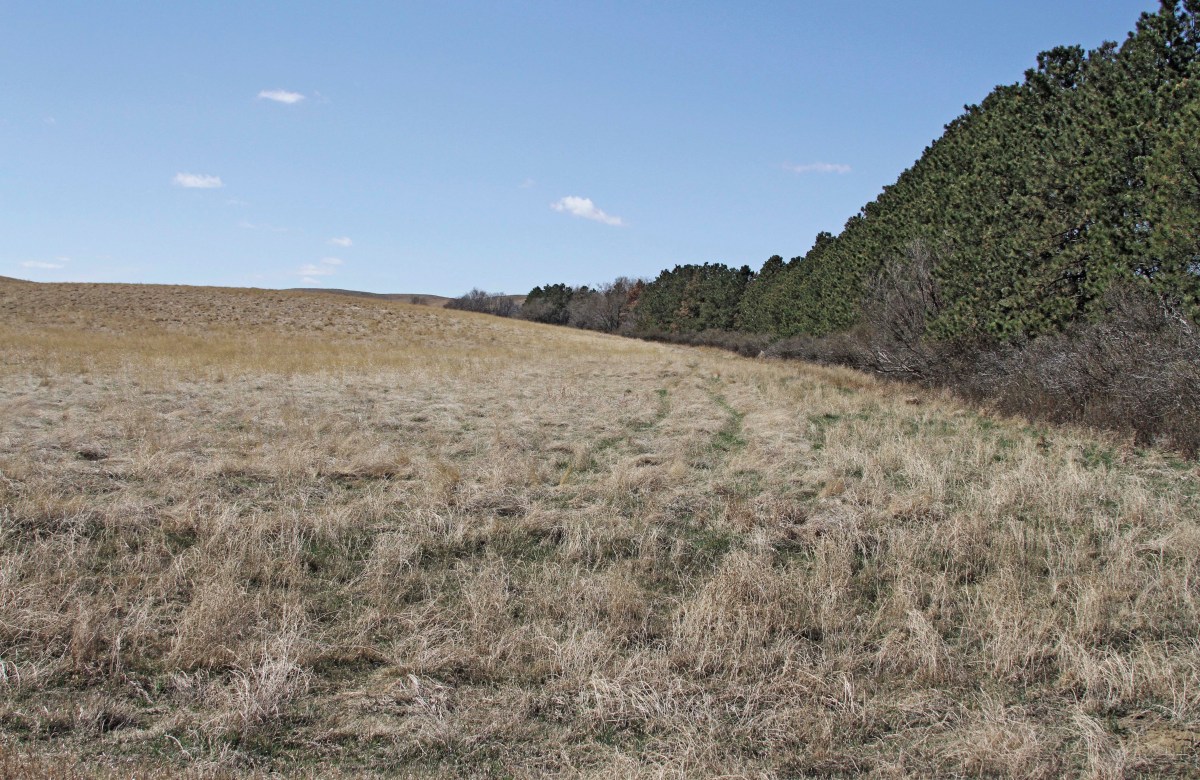
LEFOR — Tucked away a few miles west of the Enchanted Highway south of Gladstone is a large and secluded tract of land where pheasants pop out of thick grassland and deer hide in tree rows that stretch for nearly a half-mile.

It’s an area soon to become Stark County’s first North Dakota Game & Fish Department Wildlife Management Area.

The 1,120 acres of land–which consists of an adjoining section, half-section and quarter-section–was gifted to the Game and Fish Department by Regina Roth, a longtime teacher and lover of wildlife who died in January.

“I wish I would have known her because I don’t know why she did it,” said Casey Anderson, the Game & Fish Department’s assistant wildlife division chief.

Anderson said one of Roth’s wishes is certain, however. It’s that she wanted to ensure the WMA was named after her parents, Adam and Theresa Raab, who homesteaded the area. Anderson said Game & Fish will be honoring that wish.

Game & Fish has yet to complete the land acquisition process and Anderson said it may take a couple years before the WMA is complete.

The department must fence the entire area, place proper signage and rework agreements with a local farmer who leases the roughly 450 acres of cropland within the future WMA.

“We’ll get boundary fences and stuff up as soon as we can. That’s kind of the first order of business,” Anderson said. “When we were talking about doing habitat work and stuff like that, the fact that there’s an ag lease that we’re going to uphold is OK. Because there’s some things that have to be done on it before we start worrying about habitat work.”

Anderson said the boundary fencing will be up by this fall’s pheasant hunting season.

“There’s going to be all kinds of opportunities down there, as far as hunting opportunities,” he said.

The original Raab farmstead–an idyllic western North Dakota farm setting–is also part of the land donation. It’s surrounded on the north, south and east sides by hundreds of Ponderosa pine trees and Evergreens, and there are some other outbuildings.

“She had some wishes that we try to maintain that farmstead,” Anderson said, adding that Game & Fish is still checking into what it’s legally allowed to do with the farm and house on it. “We’re not necessarily in the business of having living quarters, but we’d sure like to maintain her wishes.”

Norma Hirning, whose husband Roger farms the land inside what will become the WMA, said the entire Raab family–including Regina and her brother Irving–were animal lovers who cared deeply for their land.

“The entire time I’ve known those people, they’ve had a real love for animals. Whether it’s wildlife or cattle, whatever,” Hirning said.

Though Hirning said Roth was a very private person, she touched countless lives as a teacher.

After graduating from Lefor High School, Roth began teaching at a country school nearby before even obtaining her degree from what was then Dickinson State Teacher’s College. She ended up teaching first and second grades in Mott, where she also became the elementary principal, until her retirement.

There are 215 Wildlife Management Areas throughout North Dakota either managed or partially managed by Game & Fish. The WMAs are open to hunting, fishing and trapping, and are also used for hiking, primitive camping and nature study, according to the department’s website.

Of those WMAs, only around 30 are larger than the Raab Wildlife Management Area, and many of those in western North Dakota are near Lake Sakakawea and Lake Oahe.

“This is a huge gift to the sportsmen and women of North Dakota,” Anderson said. “It’s going to open a lot of opportunities for locals that need a place to hunt.”

When Anderson presented information about the WMA to the Stark County Commission last Tuesday, Commissioner Ken Zander figured the land could have brought more than $1 million on the open market.

“When you look around, there’s not too many of us–myself included–who would have thought of doing something like this before we or I would have cashed in, and taken the money and run,” he said. “It’s a beautiful gesture.”

Game and Fish brings back bighorn sheep season

BISMARCK — The western North Dakota Badlands will likely have a bighorn sheep hunting season again this fall, the North Dakota Game and Fish Department announced Monday.

A bacterial pneumonia virus affected the state’s bighorn herd so badly in 2014 that Game and Fish closed the 2015 season.

But the animals have recovered well enough that Game and Fish Wildlife Division Chief Jeb Williams said a season will happen this fall, barring unforeseen pneumonia issues this spring and summer.

“What we found is we still have some harvestable adult sheep out there that we’d just as soon see the public utilize,” Williams said.

Historically, two to eight licenses for male bighorn sheep are drawn yearly in North Dakota, Williams said.

The 2016 season status will be determined Sept. 1 after the completion of summer population surveys, he said.

“There’s still potential for animals to die of pneumonia,” Williams said. “That’s why we have the provision in there that we’ll do our summer surveys first.”

Bighorn sheep hunting can only take place in select Badlands hunting units. The units include all of Slope and Golden Valley counties, and parts of Billings, McKenzie and Dunn counties. This year, no hunting will be allowed south of either the Theodore Roosevelt National Park North or South Units.

“It’s such a tremendous resource that we have, and it’s only found in the Badlands,” said Bruce Stillings, big game management supervisor in Dickinson’s Game and Fish office. “It’s quite a unique opportunity for our hunters to be able to hunt. The reopening is excellent news for us as a department and to the hunters alike.”

Brett Wiedmann, a big game biologist in Dickinson, said as many as 11,000 people typically send in the $5 nonrefundable application to draw one of the few bighorn sheep hunting licenses the state allots. He said that’s more applicants than Wyoming and Idaho typically receive, even though they have larger bighorn sheep populations.

“It’s one of the toughest draws of any license in North America each year we have a season,” he said. “It’s truly the hunt of a lifetime.”

The North Dakota bighorn sheep bow-hunting season is scheduled to run from Oct. 21 to Dec. 31, with a regular gun season from Oct. 28 to Dec. 31.


Watching the herd

Wiedmann is in the process of completing the 2015 bighorn sheep lambing survey and will conduct the comprehensive survey this summer.

He said lamb numbers through the herd look good, and said Game and Fish is paying close attention to the herd’s susceptibility to the pneumonia pathogens.

“It could flare up at any time,” Wiedmann said. “If we have a recurrence of pneumonia, we could lose a significant number of animals.”

However, he said the department wouldn’t have started the process of reopening the bighorn sheep hunting season if it was concerned another population disruption would happen soon. He said the pneumonia cases have slowed since late 2014.

Williams said the pneumonia issue in bighorn sheep is complex and controversial, and called it the “No. 1 concern among sheep biologists.”

He said national research has shown bighorn sheep that have contact with domestic sheep are at risk of getting the virus.

“There’s a lot of research associated with that issue,” Williams said. “At this point in time. We don’t have a definitive answer of how that happens.”


Additional elk licenses

Thirty-five additional elk hunting licenses have been added for the two western North Dakota hunting units that encompass much of the same area as the bighorn sheep hunting unit.

Game and Fish added 37 elk licenses, making 338 available in the state. The E3 unit, which is Billings, Golden Valley and Slope counties–not including Theodore Roosevelt National Park–added 10 any-elk licenses and 15 antlerless elk licenses. The E2 unit, which is Dunn and McKenzie counties, added 10 any-elk licenses.

Williams said the state has closed Sioux County to elk hunting.

He said a herd is growing in that area, so Game and Fish is working with the Standing Rock Sioux Tribe and private landowners to allow them to increase in numbers. He said an attempt could be made at reopening elk hunting in Sioux County next year.


Moose licenses added

An increasing moose population allowed Game and Fish to allow 70 more hunting licenses for the animal. The majority of the new licenses can be found in the north central units, where there has been an increase in antlerless moose.

“Moose have been doing very well in the prairie areas of North Dakota,” Williams said. “Their numbers have really been expanding … we’d just as soon have the public utilize that opportunity rather than trucks and vehicles hitting them.”

There will be 202 moose licenses drawn in the state.

The moose bow hunting season runs from Sept. 2-25, the regular season in Units M8, M9 and M10 run from Oct. 7-10 and the regular gun season for Units M5 and M6 is from Nov. 18 to Dec. 11.

Theodore Roosevelt National Park gears up for a busy year

MEDORA — Theodore Roosevelt National Park’s top official believes it could be a big year for the western North Dakota people’s playground.

Planning is already underway for the National Park Service’s yearlong centennial celebration, and Park Superintendent Wendy Ross said TRNP is anticipating a sizable boost in visitors thanks to both centennial events and North Dakota Tourism’s nationwide marketing push that highlights the park.

“The centennial is just big,” Ross said.

The publicity push, featuring actor and Minot native Josh Duhamel, includes TV commercials filmed in the park’s South Unit near Medora last summer that are now beginning to air nationally.

“I’m very optimistic,” Ross said. “I think our summer is going to be amazing.”

Boosting visitors

Ross became acting superintendent in November 2014 following Valerie Naylor’s retirement. The “acting” label was dropped last July and she moved into the role permanently.

Her goal is to capture a larger audience and get visitors to the park who may have never been there, or even heard of it, before.

TRNP’s 2015 attendance figures show it had more than 586,000 counted visitors — an increase of about 26,000 people from 2014. However, Ross said those numbers may not be entirely accurate after park officials discovered some of its people counters hadn’t been working for weeks at a time. That glitch has been fixed, she said.

“I’m really concerned about capturing what we get in terms of visitation this year,” Ross said.

Interestingly, Ross said the park is noticing a small demographic shift in who frequents the area.

“We’re just seeing more foreign visitors,” she said. “… We see people who don’t traditionally go to national parks. They’re curious about what it’s all about.”

Ross said she’s looking for opportunities for the park to become relevant to what she calls a “curious generation” beginning to travel more

“The generation that didn’t travel to national parks as children,” she said. “That’s really our opportunity now with all this promotion.”

Being ranked as the No. 5 place in the world to see in 2016 by The New York Times may play into that too, she said.

Ross said park officials worked with the Times’ staff for the piece, so they knew it was coming. But they didn’t realize the park would rank so high on the list, or be mentioned alongside some more exotic locations.

“It’s been great positive press,” she said. “You couldn’t ask for anything better than to be on that list.”

Oil and tourism

Ross said summer tourism now hops back into the front seat of North Dakota’s economy after low oil prices hurt the state’s energy industry. However, the byproduct of low oil prices is lower gas prices low, which benefits the park with both in-state and out-of-state visitors.

“When that starts decreasing, in terms of price, tourism comes up and we see that everywhere, in all national parks,” Ross said.

She said the park’s North Unit, about 15 miles south of still-booming Oil Patch hub Watford City — where the population has increased from 1,600 to around 7,000 in the past five years — has become the park’s “new front door.”

“There are all these countries represented in Watford City that were never there before,” Ross said. “It’s our chance to be relevant to a new generation and a new group of people, to think about that.”

There are challenges up north, however.

The park is working to replace its North Unit Visitors Center, which is currently a collection of portable buildings. But a replacement may be a couple years away from reality, Ross said, because of budgetary concerns. Still, she’s trying to make the North Unit more of a priority.

“It used to be a sleepy backwater, real wilderness experience,” Ross said.

TRMF’s involved in NPS centennial

The Theodore Roosevelt Medora Foundation plans to play a role in the National Park Service Centennial as well, said Justin Fisk, the foundation’s marketing director.

The foundation is sending Roosevelt impersonator Joe Wiegand away from Medora for the entire month of June to travel the country doing presentations and performances to raise awareness about the park.

The Medora Musical will also “very, very likely” have the centennial central to its daily performance, Fisk said.

“They’re writing the show right now and it’s looking cool, and they’re looking for the best way to include the National Park Service Centennial in that,” he said. “It’s pretty exciting.”

Fisk said over the next month, more centennial tie-ins and plans will be finalized between the park service and the foundation.

“With the partnership, you can actually get a lot more done,” Ross said. “You can use community members and partners to fill in some of the nuts-and-bolts gaps, but you can also create those meaningful ties your communities.”

Theodore Roosevelt National Park makes N.Y. Times’ travel list

The Little Missouri River fl ows through the North Unit of Theodore Roosevelt National Park on June 6, 2013.

NEW YORK — The New York Times’ travel editors have named Theodore Roosevelt National Park as one of its “52 Places To Go in 2016.”

The park came in at No. 5 in the newspaper’s rankings, as it spoke fondly of the 26th president who was a champion of conservation.

The Times wrote: “Fly into Dickinson in western North Dakota to visit the park named after him, where rolling grasslands dotted with bison collapse into the spectacular red, white and gold badlands of tumbling mud coulees.

“Lonely dirt roads bring you to one of the park’s less-visited attractions, Elkhorn Ranch, about 35 miles north of Medora, where Roosevelt arrived in 1884 as a young New Yorker ready to raise cattle and heal from the deaths of his wife and mother.”

The park was one of 10 American cities or landmarks to make the list, and was the first U.S. place listed.

Other U.S. locations included Park City, Utah; Grand Rapids, Mich.; Washington, D.C., Providence, R.I.; East Bay, Calif.; Rosine, Ky., St. Louis; Marfa, Texas; and Beaufort, S.C.

Year of change in Oil Patch: City leaders move forward after unexpected crude price declines in 2015

An oil well pumps on the outskirts of northwest Watford City on Oct. 14. Despite the decline in oil prices, a hectic way of life continues in many Oil Patch cities, though some city leaders say 2015 brought many changes

Leaders in western North Dakota’s Oil Patch cities say life didn’t change as abruptly as many expected it to in 2015 as crude prices bottomed out, oil rigs disappeared from the landscape, and oilfield workers packed up and left the area in droves.

As traffic slowed, crew camps closed and apartments emptied, Williston, Dickinson and Watford City continued to build infrastructure and work on long-term projects while keeping a close eye on the industry for even the slightest changes.

“As a city, we haven’t had a chance to take a breath yet,” Williston Mayor Howard Klug said. “We had $100 million worth of projects going on. We’re finally getting them all buttoned up.”

In McKenzie County, which produces more oil than any county in the state, Watford City Mayor Brent Sanford said “it’s really business as usual.” But, he said, challenges are neverending, despite the creation of what city and county leaders believe is a long-term industry through both oil and natural gas production jobs.

“People are still busy,” he said. “There’s not a lot of job loss in Watford City, comparatively, and there are still job openings. There are still employers who are still trying to figure out plans for hiring the right amount of employees and the right employees.”

Dickinson, meanwhile, has fallen back on its manufacturing industry to soften the blow of massive oilfield job loss after what City Administrator Shawn Kessel said after the city experienced multiple years of 10 percent growth.

“I think people really have to look the whole thing in perspective. … That stuff is really not sustainable in the long term,” he said. “What the downturn has done has allowed our manufacturers to take advantage of the economy. They had a hard time expanding because of such a low unemployment rate. They couldn’t find employees. Now they can. Rather than having expansions happen in other communities, they can now look at Dickinson again. I think that’s great. I’m really glad to see that. It further diversifies our economy. It makes us more resilient in managing the back side of the boom.”

Continue reading “Year of change in Oil Patch: City leaders move forward after unexpected crude price declines in 2015”