ND Delegation Upset by Obama’s Oil Tax Plan

WASHINGTON — North Dakota’s Congressional delegation is both laughing off and expressing unbridled disgust over President Barack Obama’s bid to impose a $10-a-barrel tax on crude oil.

The longshot tax proposal, which will be a part of Obama’s fi scal 2017 budget plan on Tuesday, would fund the overhaul of the nation’s aging transportation infrastructure, the White House said on Thursday.

“To be honest when I fi rst saw it, I thought someone was mistaken,” said Rep. Kevin Cramer, R-N.D. “Clearly, it’s real. … We all know it’s dead on arrival. This thing has zero chance of being taken even remotely seriously.”

The proposed fee, which would be paid by oil companies and phased in over fi ve years, was quickly met with scorn by lawmakers in the Republican-controlled Congress, and some Democrats, including North Dakota Sen. Heidi Heitkamp.

“Way to kick somebody when they’re down,” said Heitkamp, whose line was echoed almost verbatim by North Dakota Republican Sen. John Hoeven in phone interviews with The Press.

“This is never going to happen,” Heitkamp added. “This is some kind of crazy, Hail Mary pass that will never, ever see the light of day. It is not responsible if you’re trying to put together a budget. It’s really, really unfortunate.”

In the last year of his presidency, Obama has said the country must stop subsidizing the “dirty” fossil fuels of the past and focus on clean, renewable fuels that do not exacerbate climate change.

The $10 tax would, ironically, come at a time of tumbling oil prices.

Oil prices fell last month to below $30 a barrel, the lowest level since 2003, as demand fails to keep pace with a glut of new supply and the world’s biggest oil producers resist cutting production.

The fee would provide nearly $20 billion a year to help expand transit systems across the country and more than $2 billion a year to support the research and development of self-driving vehicles and other low-carbon technologies.

“By placing a fee on oil, the President’s plan creates a clear incentive for private sector innovation to reduce our reliance on oil and at the same time invests in clean energy technologies that will power our future,” the White House said in a statement.

Cramer said the proposal speaks to Obama’s radical environmental agenda.

“His goal is to make fossil fuels so expensive that other forms of energy look good by comparison, and use the extra money he raises from this stuff to further supplement the green energy sector, which can’t compete on a level playing fi eld,” Cramer said. “This is clearly all him in terms of what he believes and the way he views the world.”

Republican lawmakers, who have repeatedly clashed with the Obama administration over energy policy, panned the proposal on social media. House Majority Whip Steve Scalise asked on Twitter whether the proposal was “Obama’s worst idea yet?”

Hoeven, who is on the Senate Committee on Energy and Natural Resources, said it’s not just a bad idea economically, but also in terms of national security.

“We’re in a global battle to determine who is going to provide energy,” he said. “It’s a national security issue. … Bottom line, again, he’s making it harder for us to produce energy here at home while he makes it easier for our adversaries like Iran to produce energy.”

Neal Kirby, a spokesman for the Independent Petroleum Association of America, said in a statement that the tax would ultimately be passed along to U.S. consumers, who have benefited from low gasoline prices.

Jeff Zients, director of the White House National Economic Council, pushed back against assertions the oil tax would place U.S. crude producers at a disadvantage.

He told reporters on a call that the fee would be applied to domestically produced and imported barrels of oil but not to crude exported from the U.S. North Dakota Petroleum Council President Ron Ness said crude oil is already taxed extensively at both state and federal levels, and to impose a greater tax — especially when prices are so low — would be devastating the industry.

“You’ve got to give him (Obama) credit for sticking to his anti-American economic positions, as far as producing our own energy sources here,” Ness said. “He seems more intent on destroying our own energy economy than helping it succeed.”

Reuters contributed to this story.

Mitzel: DSU Working to Trim Budget

Dickinson State President Thomas Mitzel said Tuesday that the university isn’t cutting positions or paychecks as it begins trimming about $1.1 million from its budget, as it was ordered to do Monday by Gov. Jack Dalrymple.

“One of the things we want to make sure we do is continue the university moving forward, and not let this slow our progress,” said Mitzel, who is in his fi rst semester at DSU.

Mitzel said DSU was already prepared to cut 2.5 percent from its budget before Dalrymple ordered state agencies who receive general fund appropriations to cut 4.05 percent from their budgets. The announcement came after the Offi ce of Management and Budget announced a $1 billion revenue shortfall due to falling oil and agriculture commodity prices.

Mitzel said he didn’t have details of where the university would be making cuts, but credited its fi nancial team for planning ahead. He said he will meet with his cabinet this week to discuss areas where DSU can trim an additional 1.5 percent from the school’s budget.

“What prepping for the 2.5 percent did was it made us look at all of our different budget lines,” Mitzel said. “Where we may have surplus, where we really could not cut, where we could reallocate, and we’ve gone through most of those mind exercises already.”

The university’s general fund appropriation for 2015-17 biennium was more than $27 million, according to documents made available on DSU’s website.

Mitzel said DSU’s proposed budget cuts could be submitted to North Dakota University System Chancellor Mark Hagerott by as early as Friday.

Mitzel said the goal is to make cuts where students won’t be affected, “especially with their education.”

“We’re going to come out of this OK,” Mitzel said. “I never want to take away the signifi cance of a cut, because it’s never fun. But we’re going to come out of this OK.”

Twins Stop in Rothsay Home to Comfort 8-Year-Old Fan

ROTHSAY, Minn. — The look in Cole Fielder’s eyes said more than words.

When two Minnesota Twins baseball players and two of the team’s all-time greats walked into his bedroom Wednesday afternoon, the eight-year-old didn’t move.

But his eyes did.

“When his eyes go up, that means yes,” said his mother, Dori Fielder.

Twins Michael Cuddyer and Mike Redmond, along with Hall of Famer Harmon Killebrew and twotime World Series champion Dan Gladden, visited Cole as part of the Twins Winter Caravan.

Cole has Type I spinal muscular atrophy (SMA), a motor neuron disease which causes the muscles to atrophy, and can’t leave the house during cold months.

Doctors diagnosed Cole with SMA when he was just five weeks old.

Today, Cole is in a wheelchair, on a ventilator, has no motor functions and can’t speak. His eyes are his only form of communication.

“I’m sure it’s a little overwhelming for him,” said Redmond, a catcher entering his second season with the Twins. “On the other hand, I’m sure it’s something he’ll remember for the rest of his life.”

The caravan spent more than 30 minutes at the Fielder’s house in Rothsay, speaking with Cole and his family, taking pictures and signing memorabilia.

“I don’t think they realize what they really did for him and did for us,” Dori said.

The players said they do very few house calls during the regional goodwill tour, which also stopped in Duluth, Wadena and Fergus Falls on Wednesday.

“It’s very unique,” said Cuddyer, a third baseman entering his sixth season. “We don’t necessarily get to single homes.”

While the family rubbed shoulders with the players, the youngest members of the Fielder family, 5-year-old Tori and 4-year-old Noah, enjoyed playing with “T.C.”, the Twins mascot, who brought memorabilia items for the kids.

However, the most surprising moment for the Fielder family was the appearance of Killebrew, who wasn’t scheduled to be with the team.

“To come to a home like this, I think, is a pretty special thing to do,” said the 69-year-old Killebrew. “They’re real Twins fans here.”

That may be an understatement.

Everything in Cole’s room is associated with the major league team.

The pennants on the wall, the blanket on his bed and countless other Twins items show the family’s dedication to the baseball team.

The allegiance began when a Twins baseball game caught Cole’s attention four years ago.

“My brother just started watching it a little bit and he started liking it,” said 13-yearold Nick Fielder. “So we started watching it.”

Today, it’s his best outlet and a bonding tool for the Fielder family.

“I didn’t even start watching baseball until Cole started watching baseball,” said his father, Rick Fielder.

Kay Siebert, one of Cole’s former nurses, spent the past two years urging the public relations staff that handles the caravan to make a stop in Rothsay to visit Cole.

Siebert could hardly hold back tears of joy when she saw Cole with the players.

“I was just tickled,” Siebert said. “This is the kind of thing Cole really lives for.”

An inspiring 103 years

One-hundred and three years is a long time to be alive. Almost too long, one could argue.

But for Mildred Monke, it was a 103-year journey filled with more adventure and challenges than I or many others will likely ever experience in a lifetime.

In June of 1912, Mildred became the first Monke of her generation to be born in North Dakota. She grew up on a farm just down the road from the one where I grew up, but in a wholly different world. She was college-aged by the Dust Bowl years and knew the rigors of living in the country long before cars, satellite TV and Internet connected farm kids to the world.

Millie, a deeply religious woman, wanted nothing more in life but to meet her maker and to be with her family once again. Last Sunday, her wish finally was fulfilled when she passed away following a short but difficult bout with an infection. On Friday morning, we held her funeral at St. John Lutheran Church, where she spent several years as secretary and faithful parishioner.

She outlived two brothers and three cousins, and dozens of relatives and friends, and traveled the world long before the world was easy to travel.

Millie never married and spent 23 of the best years of her life — during which time many of her peers formed families and had children — giving her time and energy to others in India where she served as a Lutheran missionary, mostly taking care of children and the disabled for very meager earnings. I often wonder if the time she spent in India helped prolong her life exponentially, both in a physical and mental sense.

Because so many of our older generation here in Dickinson knew Millie for her work with the church and with various government agencies, last week I was asked several times how we were related.

Mildred Monke is shown during her 100th birthday celebration in June 2012.
Mildred Monke is shown during her 100th birthday celebration in June 2012. Our “Great Aunt,” a missionary, author and public servant, died last Sunday at 103 years old.

Mildred and my grandpa Clarence were double cousins. Their fathers, both from Illinois originally, married sisters from their hometown and moved to North Dakota when their father purchased farmland for them. Though they were cousins, Mildred and Clarence acted more like siblings — especially later in life after so many other relatives had passed, including Millie’s mother Sophie at 101 years old.

So to us, she has always been “Great Aunt Mildred.”

It was obvious that the bond between my grandpa and Millie grew stronger as they came to terms with their mortality. When grandpa died two Christmases ago at 93, it left Millie as the last of her generation. When she was told of my grandpa’s passing, you could tell it hurt her. There were many times she told us and others that she was ready to meet her God.

Because I only knew her later in her life, most Mildred stories naturally were ones told to me by my family or her friends and acquaintances. But perhaps what impressed me the most about Mildred is that in her early 90s, she decided to sit down at a laptop computer and write a 110-page book, “North Dakota to India: Memoirs of a Missionary.”

She wrote of her time growing up on the farm. She talked about the conflict she faced as a 20-something who didn’t know what she wanted to do with her life — a problem just as real in the 1930s as it is today — which led to her decision to go to India. She wrote endlessly about the people who kept her there so long. She wrote of the cities and places she saw in the Middle East, including Mount Everest, and the trips she took across the United States, including to both Hawaii and Alaska in her retirement years.

Though her book contains many inspiring anecdotes and moments, Mildred perhaps summed up her life best in a sentence she wrote 20 years ago during her funeral planning. “Mildred leaves this world confident in the promises of her Lord and Savior, and in the great thanksgiving and praise for friends and relatives who made life meaningful and good.”

From the beginning to the end, Millie was a faithful woman. Faithful to her God, and to her family and friends. In many ways, she exemplified what she all hope to be.

We’ll miss you Millie. Thank you for everything!

Insight: Interview with Lynn Helms

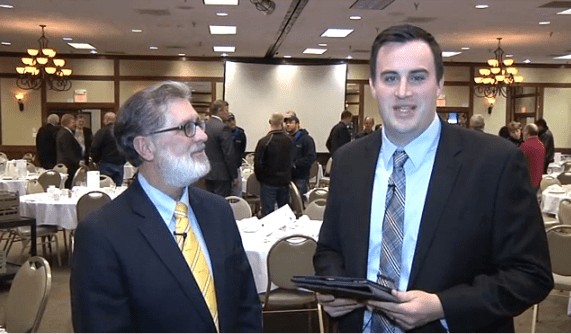
Following the State of the City address on Tuesday, Press Managing Editor Dustin Monke had an 11-minute chat with state Department of Mineral Resources Director Lynn Helms about the state of the southwest North Dakota energy industry.

They chatted about falling oil prices and rig numbers, the oilfield job outlook in western North Dakota and what kind of chances there are for oil production to ramp up in the Bakken.

[fcc_jw_player key=”vlSKTJDW”]

Check out this week’s full episode of Insight on the jump.

[fcc_jw_player key=”Ay5AiQlC”]